
Author: Chad Symens

Retail Imports Poised to Reach Record High This Summer

According to the monthly Global Port Tracker report released late last week by the National Retail Federation and Hackett Associates, retail import volume should hit an all-time high by the end of the summer. The rate of import growth at the nation’s major retail container ports has begun to slow after double-digit surges earlier this year, but if Global Port Tracker estimates are correct, August could see the highest monthly volume recorded since NRF began tracking imports in 2000.

“We’re expecting some of the largest import volumes we’ve ever seen, and that’s because retailers are responding to strong consumer demand,” said NRF Vice President for Supply Chain and Customs Policy Jonathan Gold.

Ports covered by Global Port Tracker handled 1.61 million Twenty-Foot Equivalent Units, or TEU, in April, the latest month for which after-the-fact numbers are available. That’s a 4.8 percent increase from March and up 11.3 percent from April 2016. One TEU is one 20-foot-long cargo container or its equivalent.

Driven by job and income growth coupled with low debt, the NRF has forecast that 2017 retail sales – excluding automobiles, gasoline and restaurants – will increase between 3.7 and 4.2 percent over 2016. Cargo volume does not correlate directly with sales because only the number of containers is counted, not the value of the cargo inside. Nonetheless it provides a barometer of retailers’ expectations.

With more inventory moving into stores and fulfillment centers for e-commerce sites, tracking inventory levels and monitoring markdowns at a product and store level becomes increasingly critical for vendors. Accelerated Analytics offers a comprehensive solution for collecting, analyzing, and reporting on retail EDI 852, POS, and supply chain data. Our tools provide years of best practices in retail merchandising. For more information, visit the Solutions pages of our website.

Source: National Retail Federation

Accelerated Analytics Beauty Customers L’Oreal-Lancome, Chanel and LVMH Make Forbes World’s Most Valuable Brands List

L’Oreal and several of its luxury divisions, including Lancome, utilize Accelerated Analytics to process and normalize their North America retailer POS data.

L’Oreal was announced as # 33 in the list. The L’Oreal Luxury segment markets high-end skin care and beauty products. Forbes lists its value at $107.5 billion. Lancome was just announced as being #93 on Forbes ‘The World’s Most Valuable Brands’ list. Lancome is a French luxury cosmetics house which L’Oreal has owned since 1964. The brand’s sales increased 6% in 2016. Lancome’s Definicils mascara has been a top-ranking mascara for over 10 years. Lancome’s brand value, as reported by Forbes, is $7.1 billion.

LVMH/Louis Vuitton, listed as #20 in the list, and Chanel, rated #87, both utilize Accelerated Analytics for sales and inventory analysis and daily reporting of Parfums Givenchy, Guerlain and Christian Dior products at Dillard’s.

Source: Forbes.com

Consumer Spending Gains Biggest Since December

After four slow winter months, consumers rebounded in April, increasing spending .4% from the previous month. Economists are crediting income growth, low inflation, low interest rates and rising household wealth for the rise. The Federal Reserve Bank of Atlanta predicted on Tuesday that gross domestic product would expand at 3.8%. Inflation is still weakened versus last year, and overall prices rose 1.7% in April, down from 1.7% in March.

The rise in spending was led by a .9% rise in spending on durable goods, such as autos. Spending on non-durable goods included clothing up .6%. American’ average daily spending in April was $107, up $7 from March. This is the highest spending average since May 2008. Though retail sales dropped in Q1, April could be a turning point. A Gallup poll found that Americans still prefer saving to spending, but the actual amounts they are spending has been rising.

Sources: WSJ, USA Today, Gallup

Accelerated Analytics Customers Excelling at The Home Depot

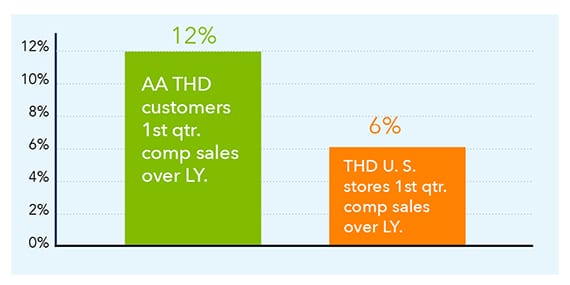
Accelerated Analytics customers who sell their products at The Home Depot saw their first quarter comp sales increase 12% over last year! That’s double the results reported by The Home Depot when they released their first quarter results last month. In a news release on May 16th, The Home Depot reported sales of $23.9 billion for the first quarter of fiscal 2017, a 4.9 percent increase from the first quarter of fiscal 2016. Comparable store sales for the first quarter of fiscal 2017 were positive 5.5 percent, and comp sales for U.S. stores were positive 6.0 percent.

DIY, Home and Hardware vendors count on Accelerated Analytics to provide an expert reporting solution that empowers their sales, marketing and store operations teams. Our product and store level analytics provides the insights needed to exceed sales goals, increase orders to fully stock their shelves, test plan-o-gram efficiencies, and prepare for line reviews.

Our customers truly are winning at retail because we understand the home improvement retail business inside and out and provide a solution that is specifically targeted to, and designed for, a DIY vendor.

Housing Investments in Q1 Boost Economy

The residential housing investments in Q1 2017 grew a huge 13.7%, which is the strongest quarter in 2 years. Data for new and existing home sales, home improvement spending and housing starts are greatly improved over those 2 years. Consumer spending in Q1 was pretty flat, growing just a slight 0.3%, but with employment and income increasing and home prices beginning to rise, consumer confidence is expected to rise along with them. What is also encouraging for the retail market is the makeup of new home buyers being new, young families, showing 1.2 million households were formed in Q1 alone.  Housing is playing an essential role in the current economy and will have a direct impact on gross domestic product, as well as supporting overall economic growth and retail spending.

Source: NRF.com

Specialty Beauty Retailer Bluemercury is Thriving Despite Downturn in Physical Retail

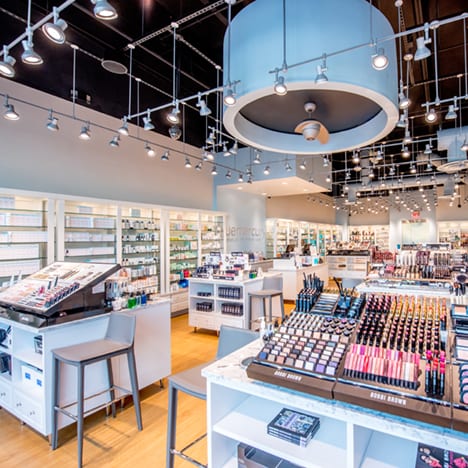
Beauty retailer Bluemercury is going strong and has plans for significant expansion during a time when many brick and mortar stores are shutting their doors.

According to Barry Beck, Founder and COO of Bluemercury, location is everything.

“I bet I could open 60 stores in Manhattan, 40 stores in Chicago, 50 in the greater Chicago area, and that’s my intention. We don’t see cannibalization, we see overall lift,” said Beck in a report by the Chicago Tribune.

BlueMercury was launched in 1999 as an upscale, neighborhood alternative to department store beauty departments. It was purchased by Macy’s in 2015 for $210 million and has nearly 140 locations nationwide with plans to open 40 stores in 2017.

When asked why he believes consumers will continue to purchase cosmetics from physical stores Beck responded, “For me it’s about customer behavior. People are ultimately social beings. They love interacting and they love being connected to each other, and shopping is a social experience, so I don’t think it’s going to go away. It’s just going to change. The store has to transition to become a place for information, education, edu-tainment, where we’ll do your facials and you can come in for a quick tip or trick or when you’ve got an emergency blemish and you’re on your way to a black-tie event.”

Accelerated Analytics reports and analyzes POS data from Bleumercury for beauty customer L’Oreal. For more information on our beauty industry expertise, POS data reporting and analysis solution and a list of our beauty clients, visit our website.

Source: Chicago Tribune

It’s Not All Bad News in the Retail Industry

Though many major retailers are dealing with shrinking sales, closing stores, deep losses and a historic wave of layoffs, home improvement and other sectors of the $400 billion retail industry are thriving.Home Improvement Retailers

Last week, department stores JC Penney and Macys both reported more bad news with regard to 2017 losses as they struggle to stay afloat. But while the outlook for department stores is bleak, John Schoen at CNBC.com writes that “there are major retail sectors that are seeing brisk growth as American consumer spending continues to undergo a major transition.”

The largest retail gains were seen in gas stations and “nonstore” retailers like Amazon.com, but right behind them is the Building Materials and Gardening sector. Thanks to a strong housing market, home improvement posted a 9.3% increase in sales over the past year. Additionally, the sector saw over 4% growth in retail jobs.

Source: CNBC.com

Accelerated Analytics Visits the National Hardware Show

Scott Garber and Chad Symens at NHS with our newest clients, Acuity Brands

The annual NRHA (North American Retail Hardware Association) sponsored National Hardware Show in Las Vegas last week was another great tradition for our Accelerated Analytics team! Thousands of vendors displayed their product lines and future new releases in everything from paints and tools to lawn care and appliances. This was a great opportunity to meet with many of our customers who use Accelerated Analytics POS reporting and analysis for their Home & Hardware retailers such as Home Depot and Lowe’s. Of particular interest was our new ability to report on corporate Ace Hardware store and SKU sales and forecasting. We met with customers WM Barr, Calumet, Masterbuilt, Bercom and Stoner. We also met with our newest customer, Acuity Brands, who sell several lighting brands such as Lithonia Lighting and Juno.

The Accelerated Analytics team connected with vendors, customers, and attendees via their #DIYisOurSweetSpot contest that ran  from May 9th – 11th, during the hardware show. Entrants completed an online entry form and posted or tweeted about Accelerated Analytics to enter the contest. Three lucky attendees were drawn at random from among the entries to win hundreds of dollars in customer product prizes. Our third place winner was Tim Chin with RPE; second place was Jason Kane with Kane Enterprises; and our grand prize winner was Stephanie Cates with Rescue Pest Control. Congratulations to all three of our contest winners!

A common theme we heard at the conference was the heavy dependence on e-commerce sales and retailers. Many of the vendors we met who are new to the retail market are selling quite successfully on e-commerce sites and on Amazon. Many of these younger vendors, rather than starting out at Home Depot or Lowe’s, were making a name for themselves on e-commerce sites before getting that “big break” at the large corporations. Fortunately, the Accelerated Analytics reporting solution isn’t limited to brick and mortar stores. We are able to offer reporting and analytics for online retailers and currently work with online giants Amazon.com and Zappos.com, among others.

When asked what new, innovative products caught a lot of attention at the show, Accelerated Analytics Director of Sales and Marketing, Jennifer Freyer commented, “ I saw some amazing products that are coming to stores. Duracell and Hillman have partnered on keyless entry products that can provide auto key solutions for 91% of vehicles without needing to pay at the dealer. In the Lawn and Garden area, the WORX Landroid robotic lawn mower was demonstrating – I need that for my lawn!” The team also met with business partners Cleveland Research Group during NHS.

The National Hardware Show is an important event for Accelerated Analytics each year.

Gen Z in the Store

Much has been said about millennials—with good reason. Their attitudes, habits, knowledge and expectations are spurring cultural and technological changes to businesses worldwide.

But the next generation is advancing, right on the heels of the millennials—Gen Z, and its presence will bring even bigger changes and challenges to retailers. While millennials made the most impact as they entered the workplace, Gen Zers, some of them currently in elementary school, are disrupting retail businesses right now.

Who is Gen Z?

Gen Zers (also known as Generation Z, Post-Millennials or iGeneration) were born between 1996-2010, and are the first digital natives. These 7 to 21-year-olds don’t remember life before mobile phones, social media or the Internet. Unlike previous eras of young people who were seen but not heard, 70% of Gen Zers say they actively influence family purchasing decisions. With their mobile devices at the ready, this global population of 2-2.5 billion (and 70 million in the U.S.) has $44 billion in buying power.

In contrast to millennials, Gen Zers are a cautious bunch. Although they may not remember 9/11 firsthand, the aftermath left them wary and more socially aware than their predecessors, which affects their shopping decisions.

Because of Gen Zers’ significant influence as shoppers—even at a young age– retailers will realize the disruptive impact of Gen Zers before other business sectors. Understanding Gen Z shoppers is the first step in attracting this young generation.

Retailers and Generation Z

4 Things Retailers Should Know About Generation Z

  1. 98% of Gen Zers still shop in brick and mortar stores. Creating the right in-store experience is crucial. From offering personalized customer service to ensuring items are in stock, retailers can make a positive impression on this desired demographic—because they may not get a second chance.
  2. Gen Z shoppers expect technologically savvy retailers. This generation goes from mobile phones to iPads to laptops—and expects fast-loading websites and an omnichannel experience. If they research an item online, then go to the store to see the item, they want that transition to be seamless.
  3. Gen Zers have money, and aren’t afraid to save it. Despite their unprecedented influence on purchasing decisions, Gen Zers are financially conservative. Moreover, this young generation has an entrepreneurial spirit and an affinity for hard work. With funds to spend, they are selective in how they spend it. Retailers who reach, attract and retain loyal Gen Z shoppers will have an advantage.
  4. Gen Zers care about social issues and are drawn to brands that do too. Although Gen Zers can still be fickle towards brands, they connect with those that promote causes and stories. Retailers must have the agility to support these brands—even as today’s cause changes tomorrow—and manage inventory to stay on top of these changes. Retailers that do will draw shoppers in search of an emotional reason to purchase.

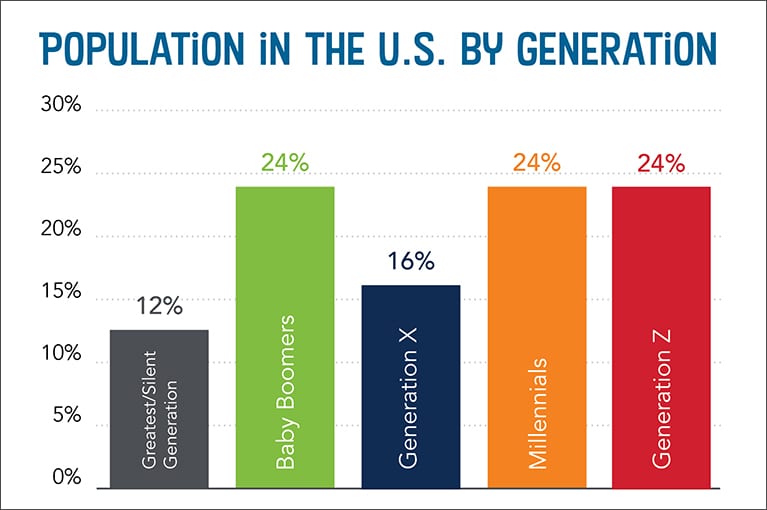
Gen Zers will be disrupting retail for a long time. Already comprising almost 25% of the U.S. population, Gen Zers will represent 40% of global consumers by 2020. Retailers who understand the distinct expectations and challenges of Gen Z will have the advantage in connecting with this unique generation.


Chart above from the infographic “What Retail Needs to Know About Generation Z”. Complete the form below to request the full infographic.

Two Accelerated Analytics Customers Named to the Green Builder Hot 50 Products List

Retailers using POS reportingEach year, Green Builder magazine makes an annual selection of the “most innovative, creative and all-around sustainable products available to the building market”. This year’s HOT 50 PRODUCTS list was announced on April 17, and two Accelerated Analytics DIY, Home & Hardware customers were named to the list: DuPont Tyvek and Trex!

DuPont Tyvek’s Protec 200 is their “best in class” underlayment product line, a secondary moisture barrier in roof construction. The product’s design is considered a “step up” from other similar products, in that it lies flat and has surface texture that makes it walkable and safer, in dry or wet conditions. The materials are 100% recyclable.

Trex’s new Signature Railing product also made the list. It is stylish aluminum railing and deck board top rail that’s durable and low-maintenance. The product can be curved for one-of-a-kind outdoor living spaces. The materials used are made from 50% recycled aluminum and are a 100% recyclable, renewable resource.

DuPont Tyvek utilizes Accelerated Analytics point of sale reporting and expert analysis for several of their retailers, including The Home Depot, The Home Depot Canada, Lowe’s, and Lowe’s Canada. Trex leverages Accelerated Analytics data reporting for The Home Depot. Expert POS reporting and analysis solutions for DIY, Home & Hardware vendors can be found on the Accelerated Analytics website.