Author: Chad Symens

Summer Retail Sales Low And Inventory Tracking a Problem

Retail sales fell in June overall, but not every segment of retail suffered. Sales at clothing and accessories stores decreased 0.1% in June and was unchanged in May. The decrease has been attributed to decreased pricing on products and low availability of inventory. Sporting goods stores also decreased in sales, by 0.6%. Online sales increased 0.4%, but consumers are being hit with emails that tell them the items they ordered online are being cancelled due to lack of availability. Retailers are struggling to get their single pool stock and sight into inventory location and availability in their reporting systems correct. Having a single pool stock in theory should make products available to any customer regardless of their shopping channel, and cut the amount of markdowns. But tight processes and reporting is needed to ensure stock is accurately reported and data collected is unified across all channels. Consumers are purchasing online, but then getting the email that some of the products are not available, but then another email asking to rate their purchases as if all the items were Retail Sales Inventory Trackingavailable – a telltale sign that data integration is not happening and a practice that leaves a bad taste in the mouths of customers. Segments that had decent sales at brick and mortar stores in June include general merchandise with 0.4% increases, building materials and supplies up 5%, and electronics and furniture both up 1%. This is in time for back-to-school college shopping that is coming in July and August. An uptick in college student enrollment is getting retailers to expect a record breaking back-to-school season. Combined back-to-school and back-to-college spending is expected to reach $83.6 billion, up more than 10% from last year. College consumers plan to spend $12.8 billion on electronics, $8 billion on clothing, $7.5 billion on snacks and food, and $4.5 billion on personal care items. Where do parents plan to buy? 57% say they will shop at department stores, 54% at discount stores and 46% at clothing stores and online.

Sources: Chain Store Age, NRF, Retail Weekly

Growing Demand and Tight Supply Lifting Home Prices

A decade after the onset of the Great Recession, the national housing market has, by many Data on the Housing Marketmeasures, returned to normal, according to the latest State of the Nation’s Housing report, being released today by the Joint Center for Housing Studies of Harvard University. Housing demand, home prices, and construction volumes are all on the rise, and the number of distressed homeowners has fallen sharply. However, along with strengthening demand, extremely tight supplies of both for-sale and for-rent homes are pushing up housing costs and adding to ongoing concerns about affordability (map + data tables). At last count in 2015, the report notes, nearly 19 million US households paid more than half of their incomes for housing (map + data tables).

National home prices hit an important milestone in 2016, finally surpassing the pre-recession peak. Drawing on newly available metro-level data, the Harvard researchers found that nominal prices were up last year in 97 of the nation’s 100 largest metropolitan areas. At the same time, though, the longer-term gains in real prices varied widely across the country, with some markets experiencing home price appreciation of more than 50 percent since 2000, while others posted only modest gains or even declines. These differences have added to the already substantial gap between home prices in the nation’s most and least expensive housing markets (map).

“While the recovery in home prices reflects a welcome pickup in demand, it is also being driven by very tight supply,” says Chris Herbert, the Center’s managing director. Even after seven straight years of  construction growth, the US added less new housing over the last decade than in any other ten-year period going back to at least the 1970s. The rebound in single-family construction has been particularly weak. According to Herbert, “Any excess housing that may have been built during the boom years has been absorbed, and a stronger supply response is going to be needed to keep pace with demand—particularly for moderately priced homes.”
Meanwhile, the national homeownership rate appears to be leveling off. Last year’s growth in homeowners was the largest increase since 2006, and early indications are that homebuying activity continued to gain traction in 2017. “Although the homeownership rate did edge down again in 2016, the decline was the smallest in years. We may be finding the bottom,” says Daniel McCue, a senior research associate at the Center.
Affordability is, of course, key. The report finds that, on average, 45 percent of renters in the nation’s metro areas could afford the monthly payments on a median-priced home in their market area. But in several high-cost metros of the Pacific Coast, Florida, and the Northeast, that share is under 25 percent. Among other factors, the future of US homeownership depends on broadening the access to mortgage financing, which remains restricted primarily to those with pristine credit.

Despite a strong rebound in multifamily construction in recent years, the rental vacancy rate hit a 30-year low in 2016. As a result, rent increases continued to outpace inflation in most markets last year. Although rent growth did slow in a few large metros—notably San Francisco and New York—there is little evidence that additions to rental supply are outstripping demand. In contrast, with most new construction at the high end and ongoing losses at the low end (interactive chart), there is a growing mismatch between the rental stock and growing demand from low- and moderate-income households.
Income growth did, however, pick up last year, reducing the number of US households paying more than 30 percent of income for housing—the standard measure of affordability—for the fifth straight year. But coming on the heels of substantial increases during the housing boom and bust, the number of households with housing cost burdens remains much higher today than at the start of last decade. Moreover, almost all of the improvement has been on the owner side. “The problem is most acute for renters. More than 11 million renter households paid more than half their incomes for housing in 2015, leaving little room to pay for life’s other necessities,” says Herbert.

Looking at the decade ahead, the report notes that as the members of the millennial generation move into their late 20s and early 30s, the demand for both rental housing and entry-level homeownership is set to soar. The most racially and ethnically diverse generation in the nation’s history, these young households will propel demand for a broad range of housing in cities, suburbs, and beyond. The baby-boom generation will also continue to play a strong role in housing markets, driving up investment in both existing and new homes to meet their changing needs as they age. “Meeting this growing and diverse demand will require concerted efforts by the public, private, and nonprofit sectors to expand the range of housing options available,” says McCue.

Source: Joint Center for Housing Studies

Optimizing Inventory: 3 Ways Your POS Data Can Help

POS Data

Nicole Leinbach Reyhle is the Founder and Publisher of Retail Minded, the Co-Founder of the Independent Retailer Conference and a regular contributor to various publications that include Entrepreuner.com.  Additionally, Reyhle is the Author of the book “Retail 101: The Guide to Managing and Marketing Your Retail Business” from McGraw-Hill and has been the Spokesperson for Small Business Saturday from American Express since 2014. Follow Reyhle on Twitter at @RetailMinded.

Merchants have task-lists that are seemingly never ending, yet fortunately many of the responsibilities that have traditionally fallen on retailers to-do-lists can now be eliminated thanks to point of sale systems. Through POS data, retailers can more efficiently manage their store operations, employee management and consumer understanding – as well as strengthen their sales. Additionally, merchants can strengthen their vendor relationships by sharing key data generated through their POS that allows the retailer and vendor to have a more transparent partnership in managing their product sales. These key factors fueled by optimizing inventory through POS data, which ultimately strengthens store success while also eliminating time and unnecessary tasks for merchants to manually complete. To discover more about optimizing inventory, consider the below three points.

#1: POS Delivers Enhanced Data That Human Touch Alone Cannot Deliver

With so many moving pieces within a store environment, it’s nearly impossible to believe that humans alone can accurately manage all the details that come with tracking inventory data. From ordering inventory to new shipments being received to stocking shelves and ultimately tracking sales of inventory sold, there are countless opportunities for inventory to be overlooked or mishandled – particularly when you factor in the number of various employees involved Optimize Inventoryin these moments. While human touch is an asset to store success, human touch alone is not able to accurately manage the details of inventory and customer behavior. Fortunately, this is where strong POS data can add value to retailers. A busy beauty retailer, for example, can gain from stronger inventory management thanks to POS data delivering a streamlined and sophisticated approach to identifying slow moving inventory, favorable time periods of products sold, successful or failed store promotions, employee sales and more – all calculating into real-time data that helps this same busy merchant make more accurate inventory decisions. This is even further supported when you factor in how store merchandisers – such as beauty brand consultants – that service stores can utilize POS data to more strategically merchandise the inventory they are refreshing based on hot selling items, slow moving inventory, promotional sales and more.

#2: POS Offers Time Saving Features That Helps Strengthen Selling Goals

Retailers are never short of things to do, which is why point-of-sale is so valuable for busy merchants to implement into their operation strategy. Through POS data, retailers gain automation, integration, analytics, CRM, employee management and more – helping to streamline the various responsibilities a merchant must cross off their to-do-lists. This saved time allows for more time to sell, sell, sell… which is ultimately the goal of any merchant. More sales translate to more inventory which ultimately leads to stronger profit and more success – something any retailer can appreciate. Additionally, with more and more consumers shopping in an omni-channel fashion – such as ordering online and picking up in store – having inventory right is key. The catch, of course, is leaning on POS data to help.

#3: POS Offers an Unbiased Eye of Inventory Performance

Just like human touch can make errors, so can the emotions that often factor into inventory buying decisions. Take, for example, the love of gardening that a hardware store owner may have – such as creating garden boxes and collecting garden tools – and thus, this retailer invests inventory dollars into a large percentage of gardening inventory that exceeds their gardening budget. While this hobby is undoubtedly one to enjoy, it should not impact buying decisions – yet too often, retail buyers let their own emotions fuel inventory choices. Keeping this in mind, POS data can offer unbiased insight on the reality of what is selling, how fast the turn-over is and what items simply aren’t performing as they were expected to. Combined with the support vendors can offer retailers based on POS data, retailers can leverage the expertise vendors have in knowing their inventory best to provide them with actionable insights they can use to optimize their inventory and increase sales – something every merchant should factor into their buying strategy since managing potentially hundreds of thousands of products across hundreds of stores and multiple vendors can prevent merchants from keeping a close on inventory down to each item and store. These key details can then be reviewed and analyzed by store buyers and vendors alike to make stronger – and less emotional – buying decisions.

Finally, remember that you cannot improve what you don’t understand – and inventory is no exception. Through POS data retailers gain visibility into their inventory management, allowing them to ultimately have a clearer, more accurate understanding of their inventory needs. With this added insight, retailers are then positioned to optimize their inventory unlike ever before – and thus, gain stronger store success.

July 4th Shopping is All About Social Media

Retailers are taking advantage of the long holiday weekend to promote sales and specials, especially around sporting goods, BBQ supplies, consumer electronics and outdoor gear. Of shoppers surveyed by ChargeItSpot,  43% of shoppers are planning to shop this weekend looking for deals and 22% said they would be shopping for sporting goods. Of those shoppers, a large majority are using social media (37%), online deal sites (17%) and mobile coupons (17%), rather than shopping in stores. The survey highlights the need for retailers to invest in social media. Magazines and news outlets are making news with lists of items for shoppers to take advantage of online this weekend, such as gym bags, wallets, grills, sun care, thermostats, swimwear and fire pits. Lots of items are of course focused around summertime activities, and span across retailers that are department stores, like Macy’s and Lord & Taylor, big box stores like WalMart, and DIY stores Lowe’s and Home Depot. Retailers are clearing out their summer inventories to prep for back-to-school.

Sources: Chain Store Age, Good Housekeeping, USA Today, CBS News

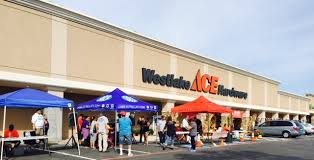
Westlake Ace Hardware Hits 100-Store Milestone

Ace Hardware ExpandsTwo new Westlake Ace Hardware stores in Omaha, Nebraska, have brought the store total for this conglomerate of Ace Hardware Stores to 100. The stores were originally Q.P. Ace Hardware Stores, and they will be rebranded with the new ownership name, while keeping personnel the same. Q.P. Ace Hardware will continue to won four other locations in Nebraska, outside of Omaha. Says Westlake Ace Hardware CEO, Tom Knox, “Westlake was founded 112 years ago and has been growing ever since. A big part of their expansion strategy has been to make acquisitions that make sense for our customers and our business as a whole.”

Accelerated Analytics can provide Westlake Ace and Corporate Ace Hardware stores POS reporting and analysis tools to vendors. Hardware and home vendors with products like cleaning supplies, fasteners, tools, paint and plumbing and electrical supplies can get easy access to item-store data to address inventory and sales on a weekly basis.

Source: Chain Store Age

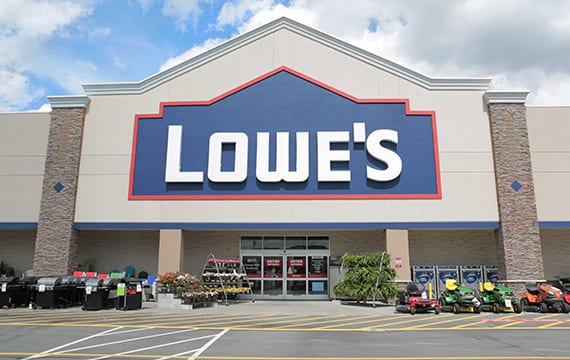
Lowe’s Completes Acquisition for Maintenance Supply Headquarters

Lowe's Acquisition for Maintenance SupplyAs part of an overall drive to broaden their relationship with pro customers and better serve their needs, Lowe’s Companies has finalized the acquisition of Maintenance Supply Headquarters for $512 million. The Houston-based company is a distributor of maintenance, repair and operations (MRO) products serving the multifamily housing industry. The deal is a next logical step for Lowe’s, which acquired Central Wholesalers, an MRO distributor in the Mid-Atlantic and Northeast, in November 2016.

“We are delighted to officially welcome Maintenance Supply Headquarters and their talented team into the Lowe’s family,” said Michael Tummillo, senior VP of Lowe’s pro sales. “Together, Maintenance Supply Headquarters and Central Wholesalers expand Lowe’s ability to serve the highly attractive and growing multifamily housing industry while strengthening our foundation for future growth with enhanced product and service offerings. With this latest transaction, we look forward to delivering even more value for our pro customers.”
With a portfolio of more than 5,300 products and value-added services for maintaining and renovating multifamily properties, Maintenance Supply Headquarters operates 13 distribution centers primarily in the western, southeastern and south central U.S. With the acquisition now complete, Lowe’s MRO business now includes 16 distribution centers generating more than $400 million in incremental annual sales.
Source: Lowes.com

Inventory Shrink is Growing

Inventory ShrinkThe National Retail Federation (NRF) and the University of Florida announced it survey results of its National Retail Security Survey last week. Inventory shrink rose to $48.9 billion in 2016, from $45.2 billion in 2015. Thefts totaled 1.44% of sales, up from 1.38%. Retailers surveyed shared that 48.8% of them reported increases in inventory shrink. Shoplifting and organized crime made up 35.6% of the shrink, while employee theft/internal made up 30%. Shoplifting averaged $798.48 per incident, more than double 2015. The rise is attributed to smaller budgets for security and loss prevention. The rest was made up of administrative error and vendor fraud or error. Another important reason to have accurate inventory reports at the item/store level to track inventory anomalies, recognize shrink sooner, and maintain accurate inventory levels of what is available to purchase in the stores. For the first time, retailers were asked in the survey about return fraud, which reported an average loss of $1766.27.

Source: Chain Store Age

How Will the UPS Holiday Shipping Fee Change Retailers’ Plans This Year?

UPS Affecting Retailers StrategiesConsumers demand more home delivery when they shop online, and demand not to pay shipping fees when they do so. Retailers have been struggling to increase their e-commerce business while offsetting declining foot traffic to physical stores. It also requires them to compete heavily with Amazon.com. The holiday shopping season sees the highest amount of deliveries. UPS global deliveries over the past 7 years has steadily increased, with 712 million deliveries during the peak holiday period in 2016.

UPS announced this week that it plans to charge retailers extra fees during the busiest weeks before Christmas. These additional fees hit all retailers, from WalMart, to Macy’s, to Amazon itself, who all count on UPS, FedEx and USPS to make their deliveries to customers’ homes. Retailers will need to decide over the next few months how to handle these extra charges, which is frustrating when trying to compete against Amazon and WalMart and others. With consumers reluctant to pay shipping charges at all, passing rates onto the customer may not be an option. They may need to increase the prices of goods or eat the costs themselves – also not good options. Some may try to spread holiday deals to other weeks during the season.

UPS maintains that it needs to increase rates during the peak week time of Black Friday to Cyber Monday and December 17-December 23, with a $.27 surcharge on all ground packages, to maintain its margins. FedEx announced its quarterly profits on Tuesday, and simply said they are considering surcharges to offset higher costs during the holidays, but are looking at all options.

Sources: Wall St. Journal, US News & World Report

Consumers Still Value Offline Shopping

According to a recent study by Mood Media titled “The State of Brick and Mortar: 2017”. The study is based on a survey of more than 11,000 consumers in nine countries and sought to better understand what influences consumers’ decisions to choose brick-and-mortar over online shopping, what they most enjoy and don’t enjoy about the in-store experience and what most motivates them in the physical store. The study also explores the influence of a store’s atmosphere – including music – on the overall shopping experience.

An overwhelming majority (72%) of U.S. consumers cite “the ability to touch, feel and try products” as their top reason for shopping in physical stores.

“The tangible, tactile nature of brick and mortar is still viewed as a very real advantage, as is the desire for instant gratification,” said Scott Moore, global senior VP of marketing for Mood Media.

The study also reveals that most consumers, especially younger ones value shopping as a form of entertainment. In the U.S., one in three shoppers aged 18-24 rated the “atmosphere and experience” as a top reason they choose in-store over online shopping.

According to the study, one of the top in-store frustrations of shoppers is items or sizes being out of stock (47%). Accurately tracking stock levels to meet consumer demand is critical. Retail POS reporting and analytics can provide vendors and brands with the information and insights they need to optimize inventory and prevent out-of-stocks.

Source: Chain Store Age


Early Back-to-School Forecast Predicts Good News for Retailers

According to eMarketer’s forecast, back-to-school retail sales will grow 4% over last year. During the core shopping season of July and August, back-to-school retail sales will account for approximately 17% of total retail sales for the year, and are projected to reach an estimated $857 billion in the U.S. in 2017.

E-commerce continues to fuel the sales growth, growing at 14.8% to $74.03 billion in 2017. That represents 8.6% of total back-to-school retail sales, up from the 7.8% share last year.

“Ecommerce growth this year comes on top of a strong year in 2016, making it that much more impressive,” said eMarketer senior analyst Yory Wurmser. “Younger consumers that shop in preparation for going back to high school and college actually prefer shopping online, so ecommerce growth should continue for the foreseeable future.”

The back-to-school shopping season is fueled by sales in 5 key categories:

  • Apparel and accessories
  • Books, music and video
  • Computers and consumer electronics
  • Office equipment and supplies
  • Toys and hobbies, including sporting goods.

Sales in these categories are expected to outpace overall ecommerce growth, growing at 15.8%.

Source: Chain Store Age