Author: Chad Symens

TOP RETAIL BRANDS OF THE YEAR ANNOUNCED

The 2016 Harris Poll EquiTrend Retail Brands of the Year study results were announced, with several retailers getting high points for engaging customers. For the fourth straight year, 2 brands took top honors in their segment categories: The Home Depot for hardware and home brand of the year, and Kohls.com as online department store of the year.

Other top winners included Macy’s as department store of the year, Nordstrom as luxury department store of the year, TJ Maxx as off-price retailer of the year, Best Buy as electronics store of the year, DSW shoes as discount shoe store of the year and Cabela’s as sporting goods store of the year.

Within retail, hardware and home store was the top ranked category, with baby boomers and GenX shoppers driving that, investing in home improvements and moving up from starter homes.

Over 97,000 US consumers rated more than 200 retail brands for the survey. The scores take into account familiarity, quality and purchase consideration.

Source: Chain Store Age


IS A ‘POKEMON GO’ GYM OR POKE STOP AT YOUR FAVORITE RETAILER?

As you look around your local restaurants, convenience stores and retailers, do you see people hard focused on their phones, and looking for something at that establishment you cannot see? Most likely these are users of the new, very popular, Pokemon Go app, getting explorers to go out into the real world with their avatars.

The game is so popular that it has already doubled the engagement of Snapchat and is beating Twitter in its percentage of daily active users. People are spending hours at a time traveling around looking for Pokemon.

Since the game maps out locations where players can find Pokemon, gather rewards at Poke Stops and battle each other at Gyms, retailers can take advantage of this major bump in foot traffic and convert gamers into shoppers. Retailers can pull up the map and find the Pokemon location closest to them. Smaller retailers can purchase “lures” on the app to increase the number of Pokemon that are virtually around their physical location. Larger retailers can determine if a Gym is nearby, and advertise incentives or give away Pokemon badges with their custom logo or business name.

While the game is not promoting specific retail sales, retailers should take advantage of the relevant, social aspect of the game to draw in traffic. The game’s developer is overwhelmed by requests from businesses who want to be included in the game – and will be announcing soon sponsored locations opportunities. Reports are out that Pokemon are hanging out in top retail brand stores including Macy’s, American Apparel, Sephora and H&M and lots of malls.

Source: Forbes, Retail Customer Experience, NCS


Luxury Goods Have Lost Their Shine


High income shoppers in the U.S. have had their confidence shaken in recent months. Between Britain’s vote to leave the E.U. and economic uncertainty in China, coupled with global stock market and currency swings, luxury brands are suffering.

China is attempting to drive down conspicuous consumption amid a slowing economy, and Chinese tourism growth has ground to halt around the world, meaning fewer visits to U.S. Department stores such as Neiman Marcus and Bloomingdale’s. Luxury retailers have every reason to be concerned.

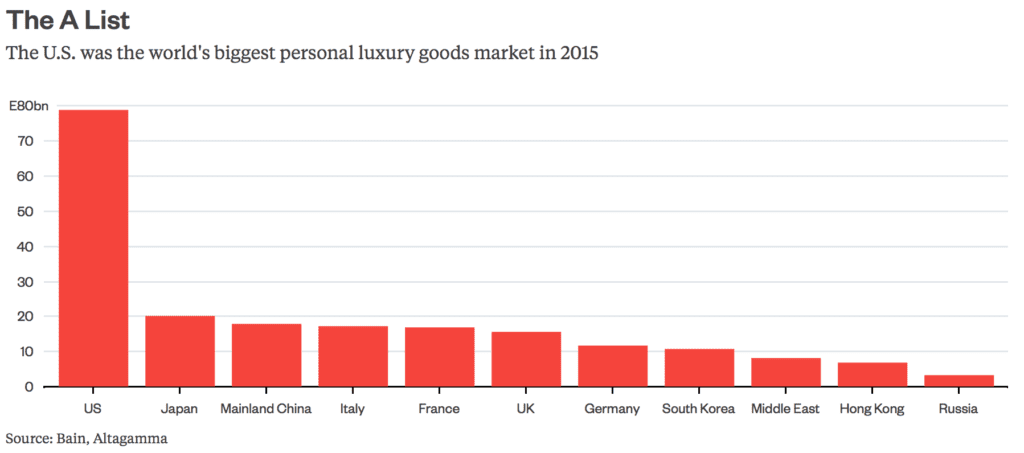
A slowdown in the U.S., the world’s biggest luxury market could send luxury sellers into a tailspin. Big spenders in the U.S. are holding back due to economic uncertainty at home and abroad. Over the past three years, Americans have contributed significantly to the growth of luxury goods, second only to the Chinese. But for now, both are pulling back. And, some luxury brands are concerned that the uncertainty surrounding the upcoming U.S. election will dampen the market further.

With the U.S. stumbling, there are few other places for luxury sellers to find growth. With the pound’s weakness against the U.S. dollar and the euro, it’s possible that Britain could offer an opportunity. But the U.K. represents just 6 percent of the global luxury market so the opportunity is relatively small.

Some brands, like Accelerated Analytics’ customer LVMH, are weathering the storm due to their diverse set of businesses. And, affordable luxury brands, such as Kate Sade and Stuart Weitzman, may benefit from shoppers trading down to more affordable luxury brands.

Source: www.bloomberg.com

FOURTH OF JULY SALES KICK INTO GEAR: WHAT WILL THE BEST DEALS BE?

School just got out, and everyone is gearing up for the big Independence Day summer holiday. But retailers are already thinking about Back to School, wanting to clear out summer inventory to make way for Back to School sales that will start right after July 4. So where will the biggest savings be, and on what products?

The best deals will be on summer items such as swim and beach wear. Also, as trendy teen and youth apparel sales have suffered in the past few months, these retailers are offering extreme deals for the 4th of July. The holiday is expected to shatter travel records due to lower gas prices. Also, as consumers spend more on experiences than on merchandise, retailers are promoting items shoppers need to have those road trips and experiences. The holiday weekend will be a great opportunity to stock up on active wear, camping gear and outdoor gear.

Wait until Back to School sales, after the holiday, for denim and electronics, when these items will have deeper discounts. Popular beauty products are not expected to be discounted, as this category is doing well and are high-margin goods for the retailers.

Source: Forbes.com 

Data Analytics Among Strategies to Combat Loss in Omnichannel

Data Analytics in Omnichannel

With new technologies hitting the market on a regular basis, the retail industry is constantly evolving. Most retailers now operate in a technologically sophisticated omnichannel environment that includes strategies to enhance selling, including online, mobile retail and social media marketing.

In a 2015 retail industry survey conducted by PricewaterhouseCoopers, findings revealed that technology is making it more difficult for retailers to prevent, detect and manage loss.

“At the core of omnichannel is the concept that a customer can securely purchase and receive their product in any manner they desire,” Zawoyski says. “For many retailers with legacy pre-omnichannel operations and systems, ensuring secure and dynamic customer purchasing and fulfillment is a significant challenge. Beyond the well-documented data breaches and information security risks, many retailers struggle with ensuring supply chain inventory accuracy.”

According to the PwC report, many companies haven’t fully integrated new technologies that are needed to combat loss in omnichannel effectively. One key recommendation for the report: Retailers should embrace the process of root cause analysis while increasing their use of data analytics to better spot and mitigate shrink. Zawoyski says 59 percent of respondents reported they are employing data analytics and end-to-end root cause analysis as a primary tool to identify losses.

One of the many strategies that PwC suggests to enhance root cause analysis is to leverage data analytics.

“Effectively leveraging advanced analytics and end-to-end root cause analysis allows retailers to assess, strategize, plan and deploy risk mitigation programs,” says Zawoyski.

Sources: National Retail Federation: STORES magazine, June 2016, PricewaterhouseCoopers

Macy’s Set to Unveil New Store Design

Retail giant Macy’s is set to debut a new store design at its remodeled location in Easton Town Center in Columbus, OH later this month. According to a report by The Columbus Dispatch, construction began on March 27th – with work taking place as the store stayed open – and the new store design prototype will be introduced on June 25th.

Everything from the lights to the flooring, fixtures and merchandise itself will be new. The model features “lifestyle” departments and leased businesses, a concept that recently gained attention when JC Penney tried it. For example, the new Restore, Nourish and Strengthen Department includes footwear from Finish Line, various brands of athletic apparel, Gaiam Yoga merchandise, Fitbit watches and a Berry Blendz full-service juice and smoothie bar.

“This is the new way Macy’s is looking at the customer,” said Andrea Schwartz, vice president of media relations and cause marketing.

Macy’s is hiring 117 additional employees at the Easton store to support several new initiatives and is counting on its heightened focus on customer service to make the physical changes to the store successful. One example is the Connect @Macy’s kiosk which will offer one-on-one service to customers as soon as they walk into the store. Additionally, Macy’s will offer a free personal-shopper service called My Stylist @Macy’s.

So far the Easton store is the only prototype.

Source: The Columbus Dispatch

Retail Sales Rose More Than Expected in May

According to the Commerce Department, U.S. retail sales rose 0.5% in May, beating a forecasted increase of just 0.3%. This followed a 1.3% increase in April and lifted sales 2.5% from a year ago.

The second straight month of gains was fueled by Americans purchasing automobiles and a range of other goods, suggesting economic growth despite a slowdown in job creation. Sales at clothing stores rose 0.8%, the largest gain in six months. Online retail sales, sporting goods and hobby stores all rose 1.3% last month and restaurant and bar sales climbed 0.8% Electronics and appliance outlets also saw a rise in sales with a 0.3% increase. Not everyone saw an increase in retail sales. Sales at building materials and garden equipment stores fell 1.8%, and furniture store sales dipped 0.1%.

The growth in retail sales could impact economist’s second quarter GDP growth estimates which are currently around a 2.5% annualized rate.

ACE HARDWARE RANKS #1 IN CUSTOMER SATISFACTION FOR THE 10th YEAR IN A ROW

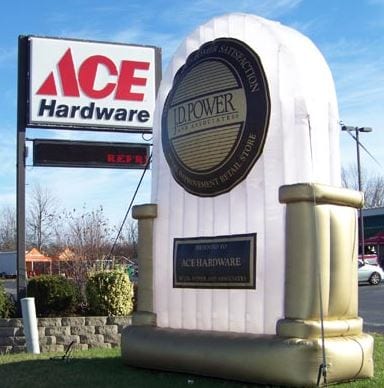
The J.D. Power 2016 Home Improvement Retailer Satisfaction Survey awarded Ace Hardware top ranking for their 10th straight year. The study surveys 2,995 customers who purchased home improvement-related products from a home improvement retailer in the last 12 months, and was conducted in January and February 2016.

On a 1,000 point scale, Ace Hardware scored 810 in overall customer satisfaction, followed by Menard’s with a score of 803. Lowe’s placed 3rd at 799. The overall average across retailers was 795, up from 788 a year ago. The Home Depot was just at the average with 794. The study found that average drops significantly when an initial greeting in the store takes longer than 2 minutes. Customers also want the retailer to provide advice, and be able to answer their questions effectively in the store. “The retailer’s staff is most critical to differentiating the experience provided to customers, especially when it comes to the timeliness of greeting customers, answering their questions or providing advice,” said Greg Truex, senior director of the at-home practice at J.D. Power. “Retailers that train their employees to engage with customers proactively and assist them are more likely to provide them with a satisfying experience during these moments of truth.”

Ace scored 855 in staff and service compared to 811 average.

According to the Home Improvement Research Institute, home improvement consumer spend is on the rise, with an expected 4% increase this year to $332 billion.

Source: Chain Store Age, JD Power.com 

Takeaways from Accelerated Analytics’ GS1 Connect 2016 Session: ‘The Importance and Value of Data Sharing – Using Point-of-Sale Data to Deliver Outstanding Customer Experiences’

I had the opportunity to lead this session last week and came back with some takeaways that I wanted to share, as I feel they are reflective of the state of retail today and how retailers and vendors are using point-of-sale data to manage their business in this time of OMNI-channel, customer-experience driven retail.

Customers want a single-vision of brands and be able to have a consistent, complete and winning experience every time they shop, in whatever channel they shop in. To ensure products are available when and where the customer shops, retailers need real-time inventory visibility, a seamless order management system and the ability to deliver. Retailers and brands realize they need to work together to have both a single view of the customer and a single view of their data in order to be successful.

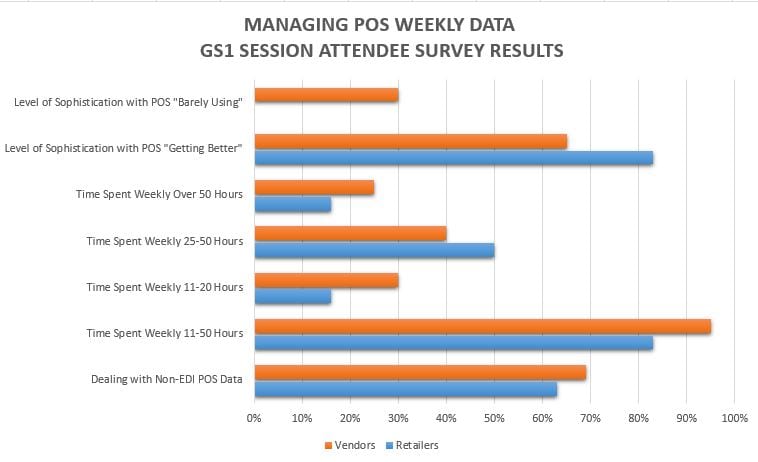
Some interesting, yet not surprising, statistics were gathered from the retailers and vendors represented in the room. When asked about managing their POS data week to week, 66% were using POS data that was not provided via an EDI 852 file, eliminating their ability to automate the collection and processing of the data electronically, and instead having to work with multiple sources and formats of data. This process of data management and then trying to create usable reports to have meaningful partnership conversations between retailer and vendor is extremely time consuming: 83% of the retailers in the room spend 11-50+ hours per week managing and processing their POS data. More staggering was 95% of the vendors in the session were spending 11-50+ hours per week: 30% spending 11-20 hours, 40% spending 25-50 hours and 25% over 50 hours per week!
Weekly POS Data

The good news is over half of the attendees in the room felt they are getting better at managing and using POS data each week, but 30% still admit to ‘Barely Using’ their POS data. Recognizing that heavy resources are needed to use POS data, especially on the vendor side, is making vendors ask, “Do we build an in-house solution to manage this, or outsource it?” Check out our infographic detailing the pros and cons of each, and the differences in resource and financial investment.

Based on the time and effort being made by most of those represented, it is clear that POS data sharing is important for effective collaboration between retailers and vendors to “get it right for the customer”. POS data can be used to not just track units sold overall, but can give product/store level details on out-of-stocks, weeks of supply, sell thru %, average sales, geographic trends, inventory investment and lost sales opportunities. CLICK HERE for our industry sell thru % guidelines infographic.

We need to do everything we can to exceed our customers’ expectations and deliver an outstanding experience for them when they come across our brand. Sharing POS data and then using it to partner together to analyze it will help shape the customers’ experiences and give us inventory visibility and fulfillment across channels to meet customer expectations.

Want to learn more? Contact Jennifer@AcceleratedAnalytics.com to start a conversation. CLICK HERE to download whitepapers on analyzing POS data like a pro.

– Jennifer Freyer, Director of Sales and Marketing, Accelerated Analytics

 

Five Below Exceeds Expectations

Specialty retailer Five Below had a strong first quarter, beating Wall Street projections for earnings and same-store sales over last year. Their net income for the first quarter of 2016 was $6.8 million, up an impressive 58% from the same time period last year. Net sales rose 25% from $153.7 million to $192.7 million.

We are very pleased with our first quarter results that once again demonstrate the universal appeal of Five Below and the disciplined execution of our key initiatives,” said Joel Anderson, CEO. “Our top-line outperformance was driven by continued strength at both our new and existing stores.”

Five Below opened 21 new stores in the first quarter of 2016 giving them 458 stores in 28 states.  They expect to open a total of 85 new stores this year, including 28 in the second quarter.

Net sales and net income are expected to continue to grow in the second quarter, with projected net sales in the $216 to $219 range and net income expected to reach between $8.5 and $9.2 million.

Source: Chain Store Age