
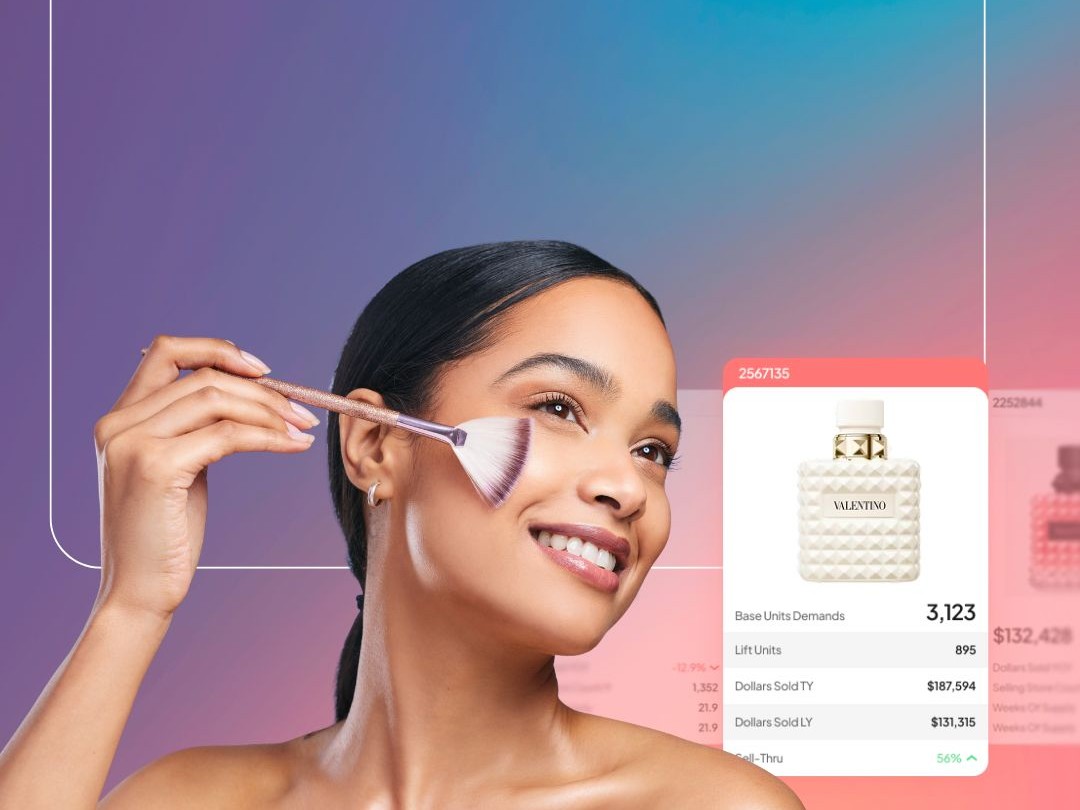
POS Data Collection & Analysis

Latest Blog Posts

EDI 852 EDI 852 Retail Sales Retail Sales supply chain POS reporting Home Depot Consumer Confidence Consumer Confidence Home Depot Walmart pos reporting Supply Chain Walmart Lowe's Earnings Earnings Lowe's out of stock out of stock Forecasting Forecasting Kohl's Macy's Macy's Retail Link Retail Link Census Census Increasing Sales Inventory Management Kohl's Supply Chain Metrics Dollar General Dollar General Nordstrom Nordstrom Collaboration Digital Retail Digital Retail Increasing Sales Inventory Management Retail Sales Figures Retail Spending Saks Wal-Mart Wal-Mart Accelerated Analytics Category Management DDSN Dillards Dillards Executive Appointments IT Spending IT Spending JC Penney JC Penney NRF POS Analysis Retail Spending Saks Sears Sell-Thru Sell-Thru social networking Target Target Tractor Supply Tractor Supply Weeks of Supply Accelerated Analytics Belk Belk BJ's BJ's Blogroll Bloomingdales Bloomingdales Bull Whip Effect Bullwhip Effect business intelligence in retail Category Management category management in retail Collaboration Costco CPFR Customer Satisfaction Customer Satisfaction CVS CVS demand driven demand driven planning Demand Driven Supply Chain demand planner demand planning DIY DIY ECR. efficient consumer response Family Dollar Family Dollar forecast GMROI GMROI GXS Home Improvement In Stock in stock Inventory JDA key performance indicators for retail LIRA Macys National Hardware Show Office Depot OfficeMax plan o gram POG pos reports price elasticity product assortment Retail Blog retail dashboards Retail Executives retail pos reporting retail replenishment SBT Scan Based Trade Sears Sephora Sephora ShopKo ShopKo SKU Analysis sps commerce store walk Trade Promotion Trading partner portals Twitter Twitter Ulta Ulta Von Maur Von Maur Walgreens Walgreens weather analysis WOS
Blog Index
The journal that this archive was targeting has been deleted. Please update your configuration.
Navigation
Thursday
May232013

Combating Showrooming

The New York Times and Forbes have both recently approached an issue every retailer is struggling with: “showrooming”.

“Showrooming” is the phenomenon of customers browsing and researching the retailer’s products, only to purchase it elsewhere for a lower price.  Many big retailers such as Wal-Mart, Target and Best Buy are price-matching and requiring unique SKUs to try to combat this problem. But how can retailers combat “showrooming” and stay competitive at full price?

Brands and retailers must strategically work together to offer custom solutions to meet their shoppers’ needs. Forrester revealed that 35 percent of shoppers are interested in custom products. Making customization a core partnership strategy is key for growth and focuses on the customer experience. Nike launched a customization program that resulted in over $100 million in revenue.

Customization creates a partnership between customers and brands. Providing a unique experience for customers will cement their loyalty and they will not have any need to look to the competition. They will stay loyal to get products they cannot get anywhere else. Only through a strong strategic partnership between brands and retailers can “showrooming” be taken out of the equation.

Tuesday
May212013

Home Depot Reports Positive Q1 2013 Results

ATLANTA, May 21, 2013 /PRNewswire/ -- The Home Depot®, the world's largest home improvement retailer, today reported sales of $19.1 billion for the first quarter of fiscal 2013, a 7.4 percent increase from the first quarter of fiscal 2012. Due to the 14th week in the fourth quarter of fiscal 2012, first quarter sales benefited from a seasonal timing change that added approximately $574 million to sales. On a like for like basis, comparable store sales for the first quarter of fiscal 2013 were positive 4.3 percent, and comp sales for U.S. stores were positive 4.8 percent.

Net earnings for the first quarter were $1.2 billion, or $0.83 per diluted share, compared with net earnings of $1.0 billion, or $0.68 per diluted share, in the same period of fiscal 2012. For the first quarter of fiscal 2013, diluted earnings per share increased 22.1 percent from the same period in the prior year.

"In the first quarter, we saw less favorable weather compared to last year, but we continue to see benefit from a recovering housing market that drove a stronger-than-expected start to the year for our business," said Frank Blake, chairman & CEO. "I would like to thank our associates for their hard work and commitment to our customers."

Updated Fiscal 2013 Guidance

Based on its year-to-date performance and outlook for the balance of the year, the Company raised its fiscal 2013 sales guidance and now expects sales to be up approximately 2.8 percent with comparable store sales up approximately 4.0 percent for the year. The Company raised its fiscal 2013 diluted earnings-per-share guidance and now expects diluted earnings per share to be up approximately 17 percent to $3.52 for the year. The Company's fiscal 2013 sales and earnings-per-share guidance is based on a 52-week year compared to fiscal 2012, a 53-week year.

The Company's earnings-per-share guidance includes the benefit of its year-to-date share repurchases and intent to repurchase $4.4 billion in additional shares over the remainder of the year, which will bring the total dollar amount of shares repurchased to $6.5 billion for the year. 

Monday
May202013

JC Penney Q1 Sales plunge

JC Penney reported a loss of $348 million for its first quarter, compared to $163 million comp last year amid a 16% decline in revenue.  The retailer is struggeling to recover from the business plans former CEO Ron Johnson had put in place.

JCP's new CEO Mike Ullman said that reconnecting with customer will take time and that they "recognized the magnitude of the challenges that we face, and we belive we can put JC Penney back on a pathway to profitable growth".   One of the strategies to put them back on track is to emphasize thier private brands.

Source: Marianne Wilson, Retailingtoday.com

Thursday
May092013

2013 National Hardware Show

The Accelerated Analytics team spent the week in Las Vegas at the National Hardware Show meeting with customers and prospective customers.  Most of the attendees we spoke with feel the economy is comming back and the remainder of 2013 will be pretty solid.  That view seems to be supported by the performance of the major retailer stock prices but the macro economic data are a bit more uncertain.  Several buyers we spoke with from national retailers said they will continue to be cautious with inventory investment so vendors will need to be careful to monitor inventory WOS to avoid stock outs. The buyers also mentioned they are taking a careful look at SKU assortments and will be more aggresive with eliminating poor performing SKU's than in past years.  Vendors will need to be careful to analyze sales data and present an accurate but favorbale picture of SKU performance to avoid being on the chopping block.  When out of stocks are increasing due to lower on hand sales can take a hit that is not related to product quality so make sure you have the data to protect your SKU's.

Saturday
May042013

Kohl's Digital Signage

I was shoping at Kohl's this morning and was somewhat surprised to see they are using digital price signs on all thier fixtures and racks.  I haven't been into a Kohl's for at least a year so I'm not sure if these are new or have been around a while.  Although the geek in me loves to see in store technology like this the business guy in me wonders what the ROI is on digital signs in a dept store.  I would be very interested in any commentary anyone would like to offer in regards to the installation price and payback on digital price signs vs. traditional paper tickets.  I can see the application in a grocery store where prices change frequently but in a department store I'm just not sure.

Thursday
Feb212013

OfficeMax and Office Depot Merge

Office Depot and OfficeMax officially ended industry speculation today confirming they will merge into a single company.  OfficeMax shareholdersw will receive 2.69 Office Depot common shares for each share of OfficeMax common stock.

“In the past decade, with the growth of the internet, our industry has changed dramatically. Combining our two companies will enhance our ability to serve customers around the world, offer new opportunities for our employees, make us a more attractive partner to our vendors, and increase stockholder value,” said Neil Austrian, chairman and CEO of Office Depot. “Office Depot and OfficeMax share a similar vision and culture, and will greatly benefit from drawing on the industry’s most talented people, combining our best practices and realizing significant savings. We are confident that this merger of equals represents a new beginning for our two companies and will allow us to build a more competitive enterprise for the long term.”

“We are excited to bring together two companies intent on accelerating innovation for our customers and better differentiating us for success in a dynamic and highly competitive global industry,” said Ravi Saligram, president and CEO of OfficeMax. “We are confident that there will be exciting new opportunities for employees as part of a truly global business. Together, we will have the opportunity to build on our strong digital platforms and to expand our multichannel capabilities to better serve our customers and to compete more effectively. Importantly, this merger of equals transaction will provide stockholders of both companies with a compelling opportunity to participate in the long-term upside potential of the combined company.”

Friday
Feb152013

LIRA Indicates Home Improvement Spending to Rise

CAMBRIDGE, MA – All signs point to a strong rebound for home improvement activity in 2013, according to the Leading Indicator of Remodeling Activity (LIRA) released today by the Remodeling Futures Program at the Joint Center for Housing Studies of Harvard University.  Robust spending in the second half of 2012 suggests the remodeling recovery is already underway, and the LIRA projects annual homeowner improvement spending will see accelerating double-digit growth through the third quarter of 2013. This news comes just ahead of the release of the Joint Center’s biennial remodeling report, The U.S. Housing Stock: Ready for Renewal, scheduled for release next Wednesday, January 23.

“It’s encouraging to see the residential sector finally contribute to growth in our economy,” says Eric S. Belsky, managing director of the Joint Center.  “Through the first three quarters of 2012, investment in the residential sector was responsible for one out of every six dollars added to our GDP.  Moving forward, home improvement spending is expected to make an even larger contribution to GDP growth.”

“There are many external economic and political risks that could derail this remodeling recovery,” says Kermit Baker, director of the Remodeling Futures Program at the Joint Center.  “However, the solid momentum behind home building activity, existing home sales, low financing costs, and remodeling contractor sentiment all point to a solid start to the new year for home improvement spending.”

To read more about the LIRA visit thier website

Friday
Feb152013

Lowe's and Home Depot Increase Seasonal Hiring

This headline caught my eye this morning: ATLANTA - The Home Depot says it has already begun filling more than 80,000 seasonal positions to assist customers during its busiest selling season - 10,000 more than last year.  I thought this was interesting from two perspectives.  First, the fact that The Home Depot is planning to hire 14% more seasonal workers than last year is a positive sign.  That means they expect the busy spring selling season to be up over last year.   Lowe's is planning to hire 13% more seasonal workers this year also.  The Home Depot vendors that we track in our retail POS reporting service are trending up so far YTD so the data we have seems to confirm their expectation.  In addition, the Joint Center for Housing Studies at Harvard University said this month that spending on home improvement increased 9 percent in 2012.  The center found that people were spending more upgrading their homes after years of holding back, and that improvements to the 2.9 million homes in or at risk of foreclosure likely will represent sources for future spending growth.    The second reason I thought this was interesting was purely from a management perspective.  Put yourself into Tom Crow the VP Human Resources at The Home Depot for a moment.  Hiring 80,000 people is an enormous task and to accomplish that task in a short window of time must be daunting.  How exactly do you process that many applications, conduct interviews and background checks, and ensure that your corporate culture is preserved when you need to hire thousands of employees every week?      

Monday
Feb042013

Unnecessarily difficult 

The objective of sharing POS data with vendors should be to make it as easy to access as possible and above all convenient.  To our dismay a significant retailer in the home improvement space charges vendors a significant sum of money to purchase a secure ID and then has the following availability "Normal hours of operation for this server are Monday, 9:30 AM to 7:30 PM and Tuesday through Sunday 7:00 AM to 7:30 PM central standard time unless otherwise noted".  So the hours that an analyst might be looking to catch up on the day's to-do list may well be unavailable which is highly annoying after speding a significant sum of money to purchase and ID to access the system.  Really?  Is it that hard to improve your system availability?  It almost feels like the 1980's all over again......

Tuesday
Jan222013

Five files that will enhance your EDI 852 reporting

After your company has EDI 852 reporting setup and you are able to analyze sales efficiently there are five additional source data files that can be added to your reporting to enhance your ability to understand sales.  Let’s spend a few minutes talking about each file.

Plan-o-gram assignment.  A plan-o-gram (POG) file identifies the SKU assortment that is sold at each of your customers stores.  These attributes are not part of an EDI 852 file so they must be setup and maintained in a separate file which can then be cross-referenced against your sales data.   A POG file will enhance your ability to (1) compare sales performance more accurately by allowing you to select truly comparable stores (2) allow you to compare the performance of the POG’s and report to your buyer on any changes that might improve sales.

Store grade data.  Not all stores have the same rate of sale so when you are reviewing a store sales report it is very helpful to have a performance grade to provide some context.  A simple A,B,C,D store grade will allow you to group and compare stores as well as monitor any changes in grade which might occur.  If you would like to know how to create a store grade download our Store Analysis How To Guide.  In addition to grading your stores based on your SKU’s sales performance you can request a store grade report from your buyer based on the total store sales.  Then you will have the ability to compare the grades and identify any variances.    

Demographic data.  After your plan-o-gram and store grades are in place you will have the ability to quickly identify stores that are performing above or below what you expect.  The next step is to attempt to discover why and demographics can often provide a clue.   Try studying the demographics of a group of grade A stores compared to a group of grade D stores and look for demographic characteristics that your marketing department tells you are important to your product sales.  These characteristics could be things like the number of housing units vs. apartments, income, race, age, etc.  If you find something interesting create a presentation with supporting data and discuss it with your buyer.  They can often provide feedback based on what their marketing teams are telling them and help you to identify your ideal demographic profile.

Account management.  If your organization has field sales or service teams adding a data file which identifies the team by store can help you quickly monitor performance.  Having this structure setup with your data also allows the field teams to more quickly segment their reports to focus on their stores. 

Sales goals.  When you are looking at sales performance at either a store or SKU level based on EDI 852 a very important piece of data is missing – the sales goal!  Is the SKU or store selling at the rate you expect and/or at a rate that will provided a positive comp from past selling periods?  If you load sales goals by SKU and store it becomes very easy to monitor performance against your objectives and it helps to keep everyone on your team focused on the right objectives.

EDI 852 data is a wonderful source of insight into what is happening at a retail store.  By adding the data files discussed above you can greatly expand your ability to quickly and effectively use the data and you will have the ability to figure out if you are hitting your goals.  Check out our free How To Guides for a more detailed explanation of some key analysis topics.  

Friday
Jan112013

Comparison of Christmas holiday selling period TY vs. LY

We spent some time reviewing Christmas comps and here are some data points and observations.  

Sample Group

  • 38 vendors in the sample selling various product departments including paint, tools, cleaning, lawn and garden, storage, electrical, and lumber. 
  • Sales numbers for Home Depot, Sears, Wal-Mart, Lowes, Target, CVS.

Results

  • All vendors as a group were up 1.40% year over year on a unit basis, and up 2.75% on a dollar basis.
  • The variability in the sample is high when comparing % change YoY across vendors and retailers.  The sample ranges from (40%) to 147% with the median being (0.21%) and the average being 11.4%.  
  • Five vendors saw a negative unit comp and a positive dollar comp.  This is interesting because it suggests a higher average dollar value per sale.

Overall Christmas 2012 finished well for most vendors when comparing against last year when you take into account that five of the negative unit comps were offset by positive dollar comps. 

Thursday
Jan102013

Demand Driven Planning in 2013

The availability of retail point of sale data over the past several years has created the opportunity for vendors to gain a detailed understanding of consumer demand at the retail point of sale.  Actual consumer demand at the retail point of sale presents a more accurate and timely picture of how your SKU’s are selling than retailer forecast advice or even retail purchase orders.  So why don’t all vendors collect EDI 852 or retail POS data from their customers and use it for creating forecasts and managing sales?  There seem to be several myths holding vendors back….

Myth #1: Collecting and analyzing EDI 852 / retail POS data is expensive and complex.  In a few limited cases like Home Depot and Menards it is true that the simple process of collecting the data has some expense.  Home Depot EDI 852 for example must be collected using a VAN so there are data transmission charges.  Menards charges a vendor to purchase a RSA SecurID.   But most retailers make EDI 852 or retail POS data available for free and even when there is a fee the benefits exceed the expenses.   Extracting the data, matching to item catalog details and store details does require some expertise but there are many SaaS applications now like Accelerated Analytics which will outsource the technical requirements for an affordable monthly fee.  By monitoring the consumer demand and inventory on hand at a SKU / store level of detail a vendor can proactively work with the retail replenishment manager to avoid out of stocks.  Every sale you get that would have been lost due to an empty shelf is returning value and paying for the expense of collecting and using the EDI 852 data.  How many lost sales do you need to recover a monthly data management fee that is typically less than $2,000?   At a chain like Home Depot with roughly 1900 stores in the USA the answer is not very many.

Myth #2:  My buyer won’t accept replenishment recommendations.  We hear this all the time – “I realize I could probably increase my in stock rate using EDI 852 / POS data but my retail customer uses automated replenishment or has a fixed open to buy plan so my recommendations fall on deaf ears”.  Several things are at work with this myth.  First, most vendors are operating on an assumption that if they talked to their buyer, they would discover is inaccurate.  I’ve talked to buyers at many retailers and I get a consistent answer – if the vendor can quantify the problem and provide an accurate order recommendation I will take it into consideration.  Second, the vendor has to demonstrate a competency in using the data for basic tasks like sales monitoring before they try to recommend orders.  I’ve seen countless examples of a vendor providing sales reporting and value to a buyer who then gains confidence the vendor can get the demand forecast right.  Finally, you have to start off slow.  Start with your highest turn products at your A volume stores and calculate the lost dollars sold for an 8 week period.  Then go to your buyer with a summary of your findings and actions to improve in stock and quantify the sales opportunity for both of you.  Make conservative recommendations to increase the WOS by one week so you gain back some sales but avoid loading the store with inventory and dropping your GMROI.  They have the same goal as you – to sell more product!

Every vendor that sells a product through a retail store should invest into analyzing retail point of sale data and using it for creating detailed action plans.  The data acquisition and reporting costs are very low when you consider them as a percentage of your retail sales and the upside benefits of increased sales, better assortment planning, and optimal inventory on hand are huge by comparison.  Let’s make 2013 the year that all vendors make the investment.  

Tuesday
Jan082013

Price Differentiation

This article about price differentiation is an interesting read.  I was aware some retailers were using this technology but it seems it's much more wide spread than I realized.


5 Valid Reasons For Retailers To Price Differentiate By Geography: http://upstreamcommerce.com/blog/2013/01/08/5-valid-reasons-retailers-price-differentiate-geography#.UOyVc4QoK-4.twitter

Tuesday
Nov132012

Home Depot Beats Estimates

Home Depot Inc.'s (HD) fiscal third-quarter earnings edged up 1.4% as the home-improvement-products retailer recorded strong revenue growth and slightly wider margins.  

Tuesday, Mr. Blake said results for the quarter "were better than we expected and reflected, in part, what we believe is the start of the path toward the healing of the housing market." 

Same-store sales rose 4.2%, reflecting a 4.3% increase in the U.S. The average ticket was $54.55, a 2.9% rise from $53.03 a year earlier, while the number of customer transactions edged up 1.7%. 

Monday
Nov052012

JDA and RedPrairie to merge 

RedPrairie and JDA Software announced a definitive merger agreement today.  Many of our vendors use JDA plan o gram software for managing their store modulars so this is an interesting development.  The "merger" sounds more like a RedPrairie acquisition of JDA based on the language in the PR.  Home Depot in particular, but other large retailers as well, have essentially told vendors they must use JDA software for POG management so it will be interesting to see if that changes now.   What does this mean for all the money vendors have put into complying with retailers POG requirements?


Letter to JDA customers

Sunday
Nov042012

YTD Comps at Home Depot and Lowe's looking good

As a group our Home Depot vendors are up 9% YTD over the prior year comp for US stores, Canadian stores are up 96%. (the Canadian sample is smaller)   Lowe’s stores are up 2% YTD over the prior year comp for US stores.   Home Depot will be releasing Q3 2012 earnings results on November 13 and Lowe’s releases their earnings on Nov 19.  We typically find that our vendors who are aggressively using POS data to drive business improvements are out in front of their competitors so I wonder how earnings overall will compare to our sample group of vendors who are doing pretty well on a year over year basis? 

Friday
Nov022012

Positve Retail Sales for October

Retail sales rose in October which is encouraging, and optimism for a good holiday sales period appear to be growing.  Some report highlights:

  • Target same store sales rose 2.4%
  • Macy’s same store sales increased 4.1%
  • Kohl’s comps rose 3.3% - more than the expected 1.1%
  • Nordstrom posted a rise of 9.9% in same store sales which was 3.9% higher than forecasted.
  • The 17 retailers Thomson Reuters tracks reported a 4.7% growth in same store sales.
  • Gap same store sales rose 4%
Wednesday
Oct102012

NRF: Holiday 2012 sales forecast to rise 4.1%

WASHINGTON — The National Retail Federation released its 2012 holiday forecast on Tuesday, which shows sales increasing 4.1% to $586.1 billion, down from last year's 5.6% growth.

However, the NRF's 2012 estimate tops the 10-year holiday sales growth average of 3.5%.

"This is the most optimistic forecast NRF has released since the recession. In spite of the uncertainties that exist in our economy and among consumers, we believe we'll see solid holiday sales growth this year," NRF president and CEO Matthew Shay said. "Variables including an upcoming presidential election, confusion surrounding the 'fiscal cliff' and concern relating to future economic growth could all combine to affect consumers' spending plans, but overall we are optimistic that retailers promotions will hit the right chord with holiday shoppers."

Recent government data released show a crosscurrent of indicators that could impact holiday sales, including unimpressive job and income growth and an unemployment rate stuck at 8%. However, positive indicators are emerging that show a cautious but capable consumer, such as increases in confidence and home prices.

"While moderate compared to what we experienced the last two holiday seasons, the forecast is a very pragmatic look at what to expect this year given the current rate of economic growth," NRF chief economist Jack Kleinhenz said.

In preparation for the holiday selling season, NRF has forecasted that retailers will hire between 585,000 and 625,000 seasonal workers, compared with the 607,500 seasonal employees hired last year.

Wednesday
Sep052012

The Role of Analytics in Retail

The role of analytics in retail has evolved substantially over the past few years and it’s having a significant positive impact.  The days of hearing a vendor say “Oh, we get an EDI 852 but we don’t really do anything with it” are starting to fade into the rear view mirror.  This blog post will discuss some of the mega trends we see occurring in business intelligence in retail and their impact on demand planning and forecasting.   

Retailers are much more open to sharing point of sale (POS) data with vendors now than they were a few years ago.  Wal-Mart paved the road with Retail Link, which gives vendors access to a wealth of data, and most other retailers use EDI 852 or a web site of some kind to make data available.  [As a side note there are some major retailers like ACE Hardware and Publix that still refuse to share POS data, which is pretty amazing]  Mega-trend:  retailers will begin to expand the metrics they share and they will slowly move toward providing daily data.  We have recently seen retailers begin to share on hand data and sales dollars which they had not shared previously.  Providing those additional data elements enables category management and demand planners to greatly expand their analytics.  We are also seeing retailers begin to make daily data available, which is probably the most exciting development in business intelligence for retail.  Demand planning and forecasting for retail is dramatically improved by daily data vs. weekly data and daily data creates the opportunity for things like weather analysis.   

Key performance indicators for retail are pretty easy to define and calculate.   Sell-through, weeks of supply, year over year comp or % change, gross margin, gross margin return on investment, etc.    We find however that many demand planners do not have the time or tools to monitor KPI’s at the store / SKU level of detail which diminishes the value that should be realized.   Mega-trend: vendors are using cloud based software as a service (SaaS) to get access to sophisticated retail reporting without having to invest into business intelligence tools and a bunch of expensive development.   Retail point of sale reporting and analytics can basically be purchased ‘out of the box’ and then customized to fit your precise business needs in a very small amount of time.  When a large customer like The Home Depot is asking you to get into the POS data, you don’t have the luxury of waiting on your IT team.   Outsourcing your retail POS reporting and analytics provides a very fast path to keeping your customer happy. 

Mega-trend: Vendors use of EDI 852 and POS analytics will become more and more sophisticated.    Not that long ago, when a vendor invested in POS reporting, they were getting ahead of their peers by using technology to improve their business.  They would build relatively simple retail dashboards with key performance indicators for retail stores, like units and dollars sold.  Today, however, we are seeing increasingly complex analysis for demand planning and forecasting, complex retail replenishment models, category management and even weather and demographic analysis.  This is a natural evolution of business intelligence in retail and it is driven by the availability of SaaS tools and very real results that vendors are experiencing.

Thursday
Aug232012

Lowe's Stumbles In Second Quarter

Lowe's posted declines in net sales, comp-store sales and earnings in the second quarter ended August 3. 

"Our results fell short of our overall expectations," said Robert Niblock, Lowe's chairman, president and CEO.  "However, I have confidence in our strategy and in our employees, and while we recognize the significant magnitude of change that we've asked the organization to absorb as we transform our business, we fully understand that we must improve our level of execution." 

The world's second largest home improvement retailer posted sales of $14.2 billion in the quarter, down 2.0% from $14.5 billion in the same quarter last year.  Comp-store sales in the quarter were negative 0.4%.  Earnings of $747 million were down 10.0% from the same quarter a year ago.

The quarterly comparisons in 2012, which is a 52 week year, are impacted by a shift in comparable weeks.  For the six month period, comparable store sales increased 1.0%.

Currently, Lowe's operates 1,748 stores in the United States, Canada and Mexico, with 196.8 million square feet of retail selling space.  That compares with rival Home Depot's store count of 2,255 stores.  Last week, Home Depot reported gains in comps and sales and a double digit percentage gain in net earnings.  

See related article: http://www.acceleratedanalytics.com/blog/2012/8/15/earnings-jump-124-at-home-depot.html 

Source:  retailingtoday.com