
Why Out-of-stocks, Data Mismatch, and Hidden Demand Still Catch Out Beauty Brands
When beauty brands review retail performance, the picture often looks reassuring.
Availability appears high. Sales reports feel complete. Forecasts are built on what was sold.
But our conversations with brands working directly with Ulta and Sephora reveal a more complicated reality. One where missed sales rarely show up in reporting, availability data doesn’t always reflect what is happening on the shelf, and demand signals are quietly distorted long before anyone realises.
This article brings together first-hand insight shared by operators working inside major beauty retailers and explains why these blind spots matter commercially for brands selling through Ulta, Sephora, and similar retail partners.
What Operators See When Products Go Out of Stock
In a recent webinar panel with business leaders selling via the Ulta ecosystem, one issue comes up repeatedly: when a product is unavailable in store, the commercial impact goes far beyond a temporary dip in sales.
As Caroline Chong explains during an Ulta performance webinar:
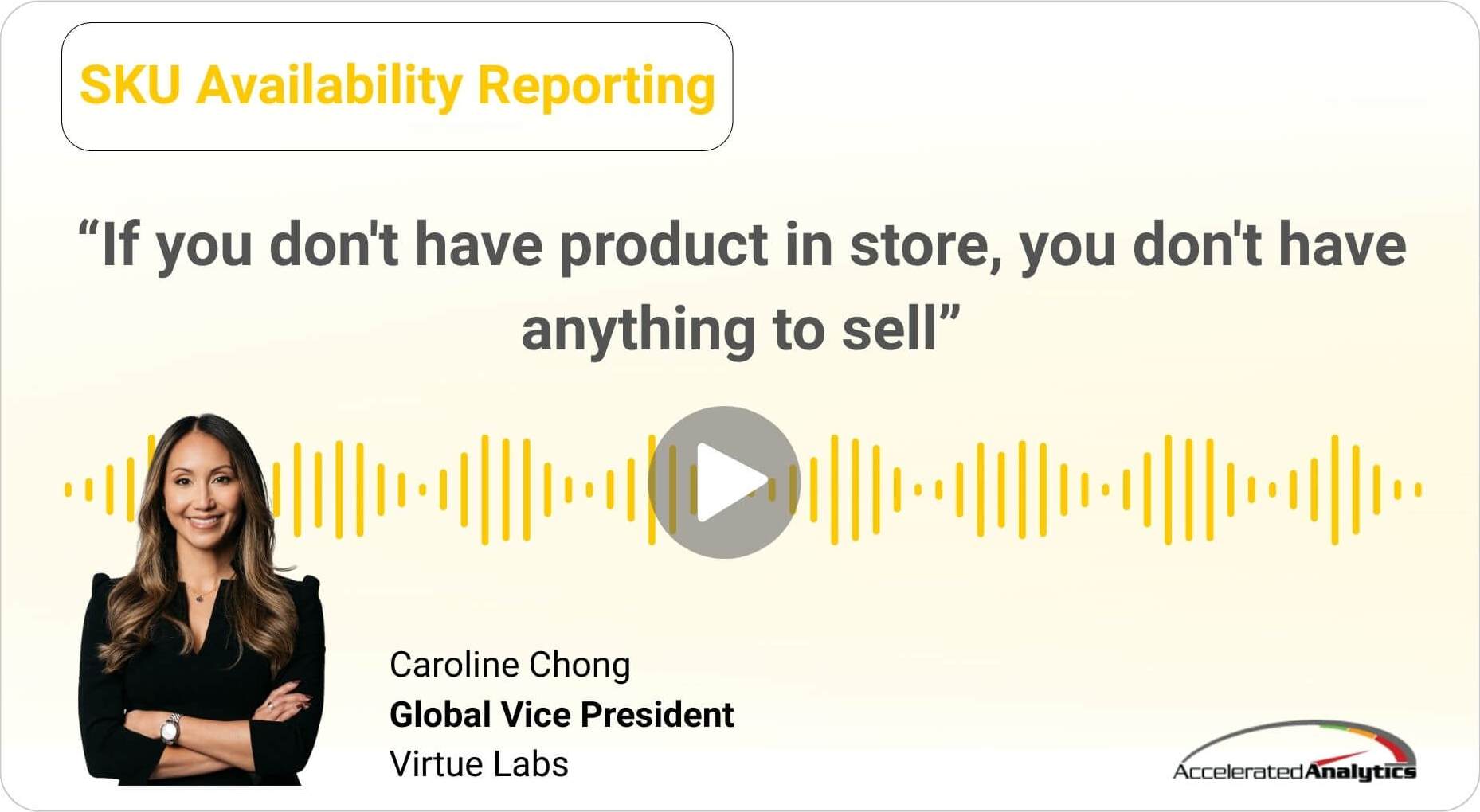
“If you don’t have product in store, you don’t have anything to sell, anything to convert. And then obviously you’ve limited yourself in terms of your future potential with Ulta and the partnership. So we do not want to leave any sales on the table as a brand, but also Ulta does not want us to leave any sales on the table.”
Caroline Chong Global Vice President Virtue Labs
What makes this especially challenging is that those lost opportunities rarely appear as a visible problem. The sales that could have happened during an out-of-stock period are never recorded, which means the underlying demand signal disappears entirely.
For beauty brands, this has knock-on effects. Forecasts inherit incomplete data. Replenishment decisions are based on what sold, not what could have sold. And by the time inventory returns, the opportunity window may already have passed.
Why Availability Metrics Can Create False Confidence
Availability is often reported as a single percentage, typically calculated using SKU counts or inventory value. On paper, those figures can look healthy, and why wouldn’t 98% availability look reassuring.
But as brand leaders working with Ulta frequently point out, those metrics do not always reflect store-level reality.
“What they have in their system is not realistic in terms of what’s actually happening in the store. Many times it’s very mismatched, and until you get that right, you’re not actually getting the right flow of goods.”
Caroline Chong Global Vice President Virtue Labs
This mismatch creates a false sense of confidence. A brand can appear 97–98% available overall while still missing meaningful revenue in high-velocity stores or on key SKUs. When availability metrics mask these gaps, corrective action tends to come late. By the time the issue surfaces in sales data, the lost demand has already gone unmeasured.
Addressing this typically requires reconciling store and SKU-level signals into a single operational view, rather than relying on aggregated retailer reports, an approach outlined in this beauty brands analytics overview.
Hidden Demand Signals Start Appearing When Retail Data Is Analysed Together
Most brands analyse retail data partner by partner.
But when datasets from retailers like Sephora, Ulta, Target and department stores are analysed together, patterns begin to emerge that traditional reporting structures rarely reveal.
These often include:
- Recurring stock-out cycles across retailers
- SKUs where demand exceeds shelf availability
- Regional demand signals masked by aggregated reporting
- Revenue lost due to constrained inventory
Accelerated Analytics was designed to uncover these patterns by harmonising fragmented retail datasets into a single analytical environment.
See how the platform identifies hidden demand signals
Why Store- and SKU-Level Visibility Changes Decisions
What differentiates brands that can act quickly from those that cannot, isn’t simply access to more reports, but access to usable, granular visibility SKU and Store level data.
From first-hand experience working with Ulta, Chong describes how decisions change once teams move beyond aggregated reporting:
“We actually go store by store, SKU by SKU to see what’s on hand and provide that by-door report to our inventory management team and merchant team on a weekly basis, to make sure we’re not missing out on anything.”
Caroline Chong Global Vice President Virtue Labs This level of insight shifts conversations with retail partners. Instead of debating whether a problem exists, teams can focus on where action is required and how to protect revenue while the opportunity still exists.
A recent example of this shift in practice can be seen in the Bubble Skincare case study, where fragmented retail signals were consolidated to improve visibility and decision-making.
From Suspicion to Measurement: Making the Problem Visible
Across discussions with teams selling through Ulta and Sephora, the same pattern emerges. Brands often suspect they are missing opportunities but lack the visibility to quantify the impact.
During a Sephora strategy discussion, Holly Basher highlighted how timing plays a critical role:
“Having the data upfront really allows you to work instantaneously instead of dragging out and waiting for the data. So, you’re able to be in the moment and be proactive versus reactive.”

Holly Bashor
Senior Director of Sales and Education
Helen of Troy
Once brands begin reconstructing demand using store-level and SKU-level signals, the conversation changes. The question is no longer whether opportunity exists, but how much demand has been going unseen and what that means for forecasting, launches, and future growth.
This is typically the point where platforms like Accelerated Analytics are introduced, not as a reporting layer, but as a way to normalise fragmented retail data and surface signals that traditional reporting structures miss.
A practical overview of how this consolidation works across retailers like Ulta and Sephora can be seen on the beauty brands retail analytics page.
What This Means for Beauty Brands
For beauty brands selling through major retailers, these challenges are rarely isolated. They influence launch performance, replenishment decisions, retailer relationships, and long-term planning.
When missed demand remains invisible, businesses optimise around an incomplete picture and revenue leakage becomes systemic rather than incidental.
See How Beauty Brands Identify Lost Revenue from Stockouts
Brands working with retailers like Sephora, Ulta and Target often discover that reported demand understates true market demand.
By analysing retail sales patterns alongside inventory availability, it becomes possible to identify:
- Where stockouts suppressed demand
- Which SKUs consistently sell out after replenishment
- Which doors are under-allocated inventory
- How much revenue is being missed
Accelerated Analytics helps brands uncover these patterns by harmonising fragmented retail data across partners.
See how this works using real retail datasets.