
Author: Chad Symens

250 In ’22… Ulta’s Magic Number As They Open More Stores In Target

Ulta is keeping true to their word, with a plan to open an additional 250 store throughout 2022 (adding to their over 100 stores last year).

The locations aren’t yet known, but the continued expansion of the brand coupled with what we’re learning from previous expansions into the Target demographic space demonstrate that the consumer seems to be all in and all on board. Concerns over product cannibalism have largely been quelled and, in fact, the data are looking solid for expanded sales to match both brands’ continued strategic goals. Interested in learning what insights we’ve gained so far? Let’s talk.

Accelerated Analytics helps brands not only drive success with their business, but demonstrate ownership of coveted retail shelf space. We work with the raw data that retailers provide (such as portal files, EDI 852 documents, etc.) and help make sense of this data, organizing it into practical, actionable, and human-readable data points that help your brand management team navigate the daily changes in consumer tides. A level of inventory management, nimbleness, and readiness that retailers like Ulta expect, yet don’t always see.

We know Ulta…

Check out our dedicated Ulta Reports here. Then, let’s set up a meet to look over your brand’s use of its available data and how our sales reporting tools can help your brand specifically stay ahead of the curve at box stores like Target and Ulta.
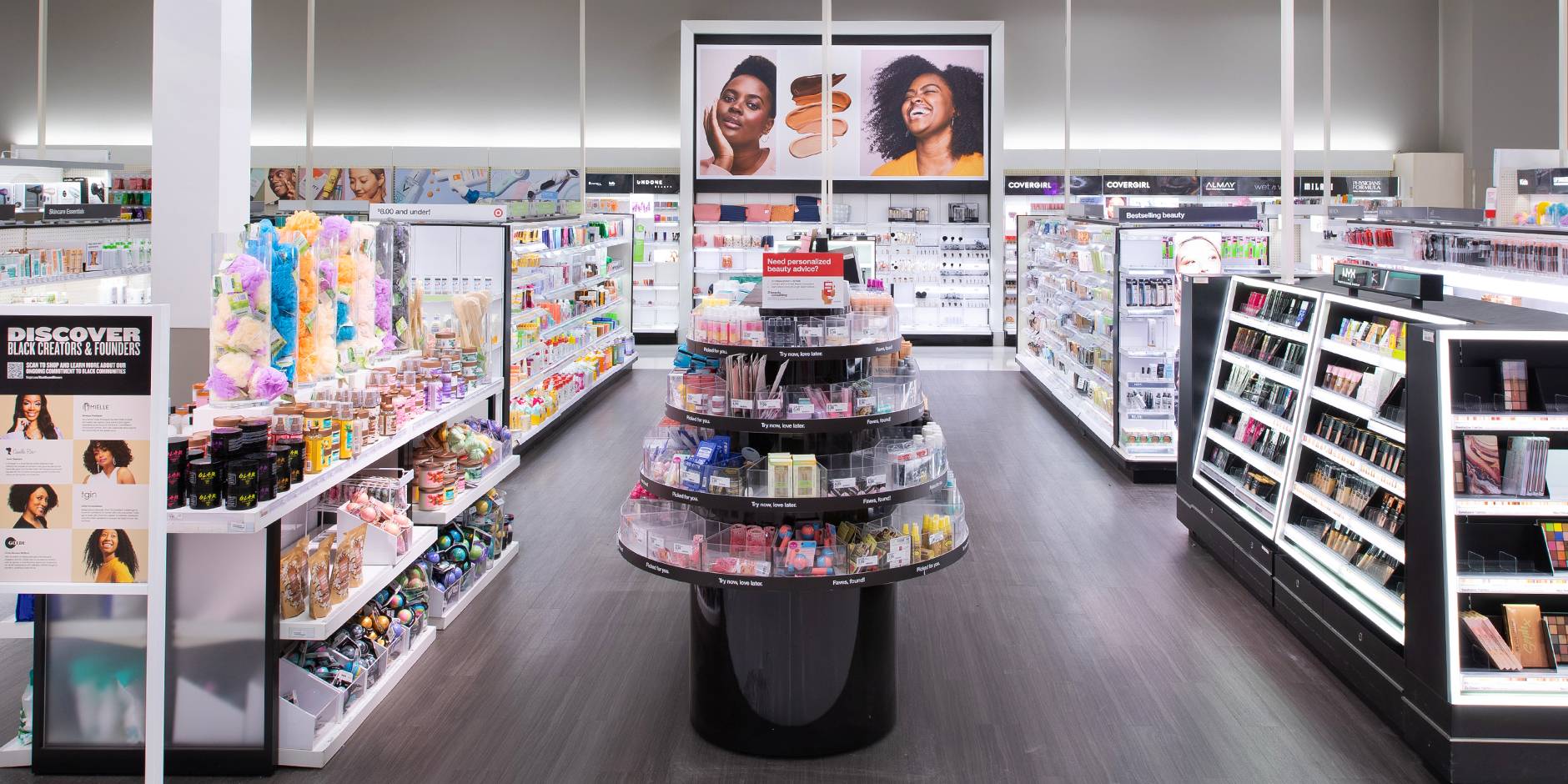

Diversity in the Spotlight as Target & Ulta Advance Momentum

Across the industry and throughout the consumer space, BIOPOC-focused products and providers are in the spotlight.

Ulta recently put their money with their hearts are by unveiling a $50 million investment in DE&I (a doubling 2021’s $25 million commitment) saying that its focus is across four categories: bolstering underrepresented voices, diversifying product offerings, and improving experiences for both customers and associates. Not to be outdone, Target added 20 Black-owned or Black-founded beauty brands to its catalog of products (a 65% boost in offerings since 2020 with over 70 now available). Target last year also pledged to spend over $2 billion with Black-owned businesses by the close of 2025.

In an interview with Ulta Beauty CEO Dave Kimbell on the topic of installing Pattern Beauty founder Tracee Ellis Ross as Ulta’s DE&I advisor, Mr. Kimbell said “…[simply stocking products from] diverse founders doesn’t guarantee that these brands are going to be successful. We’ve spent time listening to Tracee’s experience to make sure we can create an environment where emerging BIPOC brands are supported as they navigate the Ulta Beauty environment, so they understand the supply chain, they’re building branding, etc.”

This is important to our team as well. Accelerated Analytics helps brands not only drive success with their business, but demonstrate ownership of coveted retail shelf space. We work with the raw data that retailers provide (such as portal files, EDI 852 documents, etc.) and help make sense of this data, organizing it into practical, actionable, and human-readable data points that help your brand management team navigate the daily changes in consumer tides. A level of inventory management, nimbleness, and readiness that retailers like Ulta expect, yet don’t always see.

Check out our dedicated Ulta Reports here. Then, let’s set up a meet to look over your brand’s use of its available data and how our sales reporting tools can help your brand specifically stay ahead of the curve at box stores like Target and Ulta.

We’re On the Way Back… Just Slowly – Keep An Eye On The Ball.

While 2020 saw a slough of retail closures, whether temporary (in response to regional COVID outbreaks) or permanently for this and a myriad of other reasons, 2021 saw only slight improvements throughout what many insiders had high hopes would be a year of return to more traditional numbers – at least partially.

But not to be outdone, 2021 introduced new problems. Most notably, the Supply Chain backups that we all still haven’t begun to recover from. Retailers nevertheless adjusted along with vendors, placing more emphasis on fewer items that in-turn rely on less (or more readily-accessible) component materials. This helped stave off the majority of empty shelf crises.

Patient and eager for a return to the norm themselves, consumers have indeed been fueling what the industry hoped would be more traditional numbers for this time of year… and while evident, what we’re seeing is perhaps more interesting. We’ve been monitoring numbers even higher than that of pre-pandemic fame and the trend seems to be carrying out through the bellwether season.

We’ll keep up on this, but for now, it’ll be important to monitor both online and in-store sales, as well as other metrics like curbside delivery and similar COVID response services that consumers have grown fond of (and may not so easily let go of even after COVID has finally subsided).

Until then, while COVID is still maneuvering about the country, it may be valuable time invested for your brand management team to line up your retail POS reports from a regional perspective in order to see how consumer, retailer and other peer brands are benefiting from each response strategy.

Let’s set up a meet to look over your brand’s position and see how our sales reporting can help drive the best path forward.

COVID-19 adds to the cart in benefits of DOTCOM

All eyes are on this season’s Black Friday numbers.

The industry’s been watching the holiday numbers with growing anticipation for the past few months, but this season’s Black Friday will be one of the first bellwether events that we can point to in order to identify the most accurate forecasting markers being used. However, the date (like many holiday season goal posts) has proven to be a shifting target and this is less of an indicator of the effects of COVID-19 and more of a sign of the blossoming DOTCOM era itself – one not fueled so much by industry insiders, but by the consumer market itself.

That said, the consumer has also proven to push back against most industry efforts to shift online entirely, opting in good part, for that familiar holiday experience of shopping locally at box retailers for their gifts and goods. This leverage they (the consumers) have in driving a market that ebbs this way and that is impressive and this is where Accelerated Analytics has helped familiar, household brands make better, data-driven decisions.

You see, our team looks at the wealth of raw POS data provided by retailers to manufacturers, wholesalers, and distributors and we help your brand management team make sense of it all across the board… regionally, at the store-level, at the SKU-level, and yes… across multiple retailers all in the same reports. In some cases, we can provide more information than you’re offered out of the gate. So, as we all watch this holiday season to see where the consumer is indeed headed for their shopping needs, the data your team is getting could just be the start.

Let’s set up a meet to look over your brand’s position and see how our sales reporting can help drive the best path forward.

A strong retail holiday season dangles before us…

As a strong retail holiday season dangles before us – B&M retailers race to restock inventory.

The Supply Chain hasn’t quite recovered from the onslaught of online purchases initially fueled by convenience and later by the global pandemic (for perspective, a relatively common once-in-100-year natural cycle of viral hardship that is, for the most part, facing post-industrial consumerism head on for the first time e.g. “Spanish Flu… meet the mall”).

As we’ve seen over the last several buying seasons, box retailers such as Target, Walmart, and Best Buy have been pivoting any which way they can in order to stay on top of a widely-shifting market and now, with an increasing number of vaccinated consumers and a declining number of COVID cases in the US, they’re eager to get caught up and back to the norm – whatever that is going forward.

In fact, these national brands have already begun replenishing their stockpiles (and significantly so), with some retailers charting a double-digit increase in percentage of their inventories. Of course, retail sales data has been paramount in navigating all retail decisions to now, but as we shift into replenishing and making sense of consumer purchasing on the other side of COVID, POS data will become even more of a key player in the decisions that brand manufacturers, wholesalers, and distributors have to make in order to keep up with retailer pivots… and ultimately those of the consumer as well.

We can help set up your team with the tools to navigate these waters. Daily inventory across retailers, regions, DOORS and by SKUs? Yeah, we’ve got you covered. Let’s talk… set up a quick walkthrough of our platform and review of your operations here.

COVID rears its ugly head – this time upsetting DIY retail spending

the home depot edi

The Delta variant of COVID-19 has up-ended high expectations of a solid economic return…

But this time, as opposed to last year, we’re seeing its negative effects in the seemingly pandemic-proof DIY space. Despite a five-quarter financial high, the numbers are now in and Lowe’s and The Home Depot are seeing data suggesting that the smooth boost they’ve been enjoying may be leveling out or even teetering back downward (time will tell). Both retail giants (and by suggestion, their peers in the space) expect future gains to be closer to pre-pandemic ranges with Supply Chain issues anticipated to continue holding back growth.

Lowe’s CEO, however, touts a newly observed norm in the home’s importance that he doesn’t see changing anytime soon. Always with a positive perspective, he implies that the pandemic (which has forced so many brick-and-mortar shoppers to sit at home and make their purchases online) has simultaneously forged a newly-invigorated love for home ownership and care. Something he feels will project forward and translate into levelled, even improved growth over time.

Both Lowe’s and The Home Depot express confidence in their data projections going forward… but where are your brand’s product projections? We can help set up your team with the tools to know. Daily inventory across retailers, regions, DOORS and by SKUs? Yeah, we’ve got you covered. Let’s talk… set up a quick walkthrough of our platform and review of your operations here.

Will the ebb and flow of mask guidelines outpace consumer patience?

As mask guidelines change, consumer experiences will be affected, but can retail leadership help? Let’s dive in…

CDC mask guidelines have now largely reverted to the more stringent standards we saw a year ago during the (previous) worst peaks of the pandemic. And as retailers across the United States play catch-up with these newly-updated guidelines, the question industry insiders will have to consider is: can or will consumers en masse keep up? While safety is undoubtedly the singular concern, message cohesiveness also plays a role in getting that message out and out of the way of daily operations, especially when dealing not only with the vast marketplace that B&M retailers make up geographically, but when dealing with the psychology of such a large and diverse base of shoppers.

“Do or do not, there is no try…” one masterful puppet once said. This may ultimately become the formula for retailers as they communicate their own standards based on the guidelines given by the CDC and other local governments. Perhaps a better interpretation of this is “Act or do not act, but do so quickly…” in that there’s strength and cohesiveness in numbers. That is to say, if the consumer (pardon the pun) faces the retail shopping experience with new mask mandates that are evenly distributed across the board – across all or at least most retailers, then they may feel less frustrated than those mask mandates that are implemented in one retailer but not the other – inevitably putting pressure on the consumer to “learn” what each individual retailer has set as their own standard.

On the other hand, week-long or month-long delays in individual retailer mask mandates throughout the US may put added pressure on consumers who cross over retailer brands to get access to the merchandise they seek. Shop at one store, masks on. Shop at another, masks optional. Shop at a third… unknown. Some consumers may want to just get in and out without the “butter-side-up / butter-side-down” research required on the matter for each store. Of course, another consideration is that if one retailer responds to the change in guidelines weeks sooner than another, there may be competitive advantages and disadvantages to one over the other in either direction. Although tracking such uneven advantages could be near impossible, it will be interesting to see if this can or does become an emerging metric that influences inventory distribution and sales.

The takeaway is this… whether or not leadership comes from the top down (from government through retailers), quick and decisive leadership on the matter from the retailers themselves could take undue pressure off of the consumers and free them up for doing what we all want them to do… shop and enjoy their experience as much as possible in these trying times. If you’re not monitoring daily inventory across retailers, regions, DOORS and by SKUs… we need to talk… set up a quick walkthrough of our platform and review of your operations here.

What is LVMH clueing into that we could learn from?

Inventory Receiving

Louis Vuitton-owner LVMH says the future of retail is in-store

Whether you take it as a foreboding insight or a position requiring a grain of salt, their research shows that Brick & Mortar is still king… for the foreseeable future, anyway. According to the chief financial officer at LVMH, Jean Jacques Guiony, the consumer still craves the in-store experience.

Backed by data on their end Mr. Guiony opines “We see the future being two things: being mostly retail stores, because the client experience in a retail store cannot be matched easily online. As of today, I mean, no one has found the sort of miracle formula that would enable clients to enjoy as much online… the second point is also to enrich this experience with online content…”

While few dispute the back-and-forth battle between DOTCOM and B&M for retail customer attention and dollars, the battle lines seem to be drawn further one direction or the other based on data that retailers gather and hold on to. What’s your data showing? If you’re not monitoring daily inventory across retailers, regions, DOORS and by SKUs… we need to talk… set up a quick walkthrough of our platform and review of your operations here.

Are retail brands REALLY ready for the post-COVID rush?

Omnichannel B&M retailers are scrambling

Don’t high-five just yet… as we appear to be rounding the corner on the global pandemic that has not only immediately affected retail B&M sales, disrupted major Supply Chains, and reshaped the retail landscape, there’s another shift (or two) on the horizon. First and foremost, we all have to familiarize ourselves with the new consumer shopper.


It’s not enough for B&M retailers to be safe, they have to feel safe. We are looking at multiple and vast consumer re-education campaigns that don’t yet seem to have been launched en mass. Nevertheless, the shoppers are coming – ready and anxious to get back to the norm. But are we ready for the influx? B&M retailers are now scrambling…


  • to satisfy now-largely-adopted online consumer purchasing habits as this becomes a stronger contender of brand sales,
  • to adjust to new omnichannel legs including marketplaces, social media sites and last-mile delivery partners, and
  • to welcome the expected returning Summer influx of newly vaccinated customers stepping back into “the norm”.


The pandemic has given a significant boost to DOTCOM, but as we enter an omnichannel rebalancing stage in the upcoming months, balancing your inventory distribution based on solid numbers is going to be a make-or-break brand capability. Let’s talk: set up a quick walkthrough of our platform and review of your operations here.

What did Ulta learn from the Pandemic?

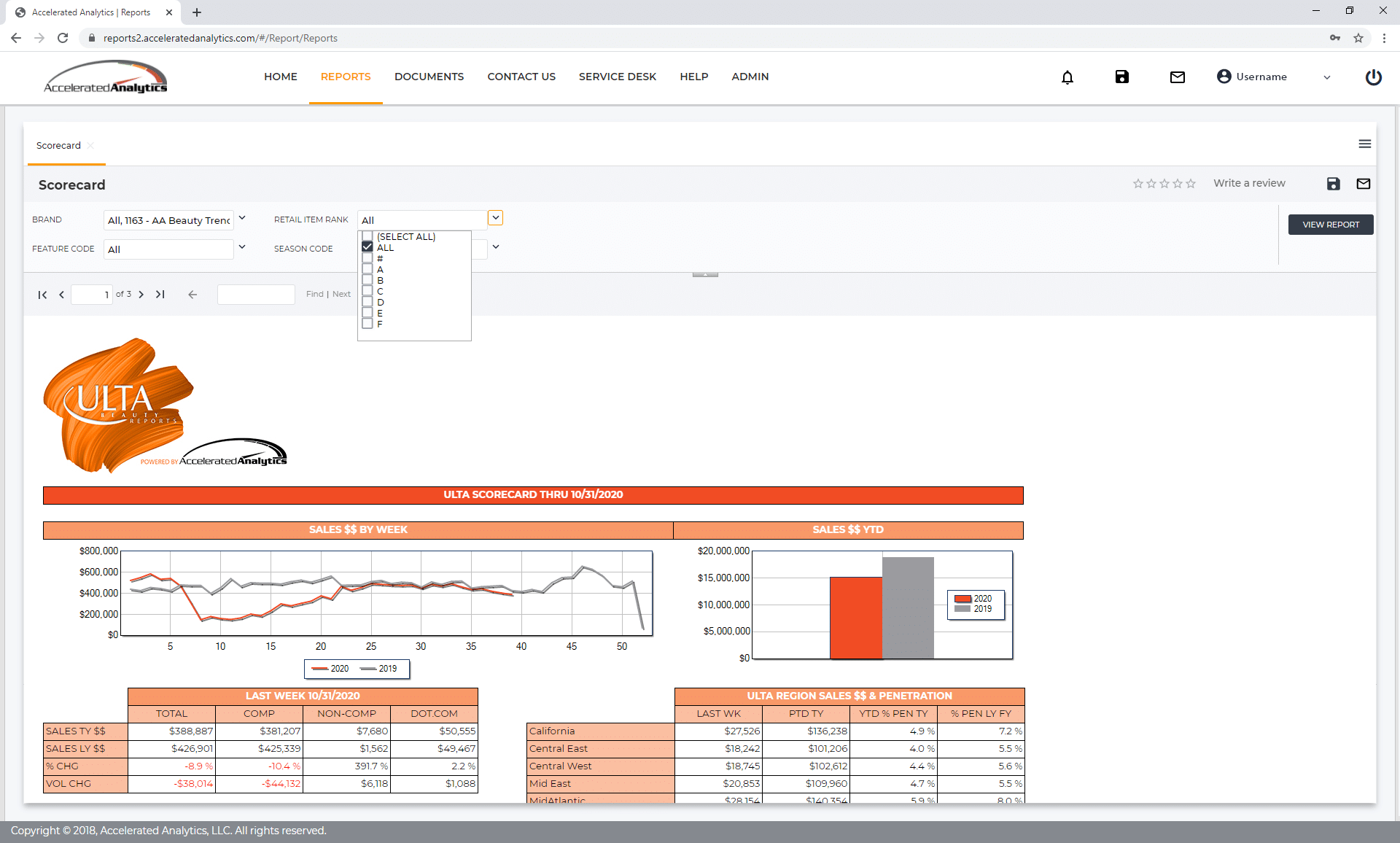
Ulta Score Card Report Demo

They got back to the basics…

When the pandemic hit last year, few were fully prepared. How could you be? In our lean and mean industry where shelf space is precious and timing is key, there’s little room for catastrophic, once-in-a-century events to come pushing through the supply chain. But that’s exactly what happened. So aside from prognostication, successful retailers and brands relied heavily on nimble adaptation and data to light the path forward. Keys to Ulta’s success in doing just this:

  • Find your advocates and leverage their voice. Ulta found existing super-users that were already pushing the brand and amplified their messaging.
  • Engage with the community, listen, and take note on what they want you to be to them. The team reached out to the community and adapted to become what the market wanted/needed during the pandemic.
  • Remain nimble and adapt quickly. Continued analysis of the market and omnichannel optimization were top of mind for CEO Mary Dillon.
  • Use all available tools. Without daily data in hand, it’ll be difficult to plot a proper course and adjust like Ulta has learned to do.

As we work our way back to normal (or some semblance of it), how are your data tools looking? To learn more about how our reporting can help you make better use of your retail sales data and what makes us different than the retailer reporting tools you may be using, be sure to set up a quick walkthrough of our platform and review of your operations here.